Nicaragua: The Debrief

What we did and what you can do too…

Eat: Steak (with apologies to our vegetarian brethren)

Seeing the ropy-looking cows moping around the Nicaraguan countryside might not get red-blooded carnivores slathering but the beef mostly comes from Argentina. What’s great about Nicaragua is the way they cook it. Judging by the tenderness of the Churrasco we tried – for instance at El Zaguan in Granada – they marinade for a hell of a long time. Grilling is the method of choice and they do it to perfection. Tuck in.

Drink: From a volcanic waterfall.

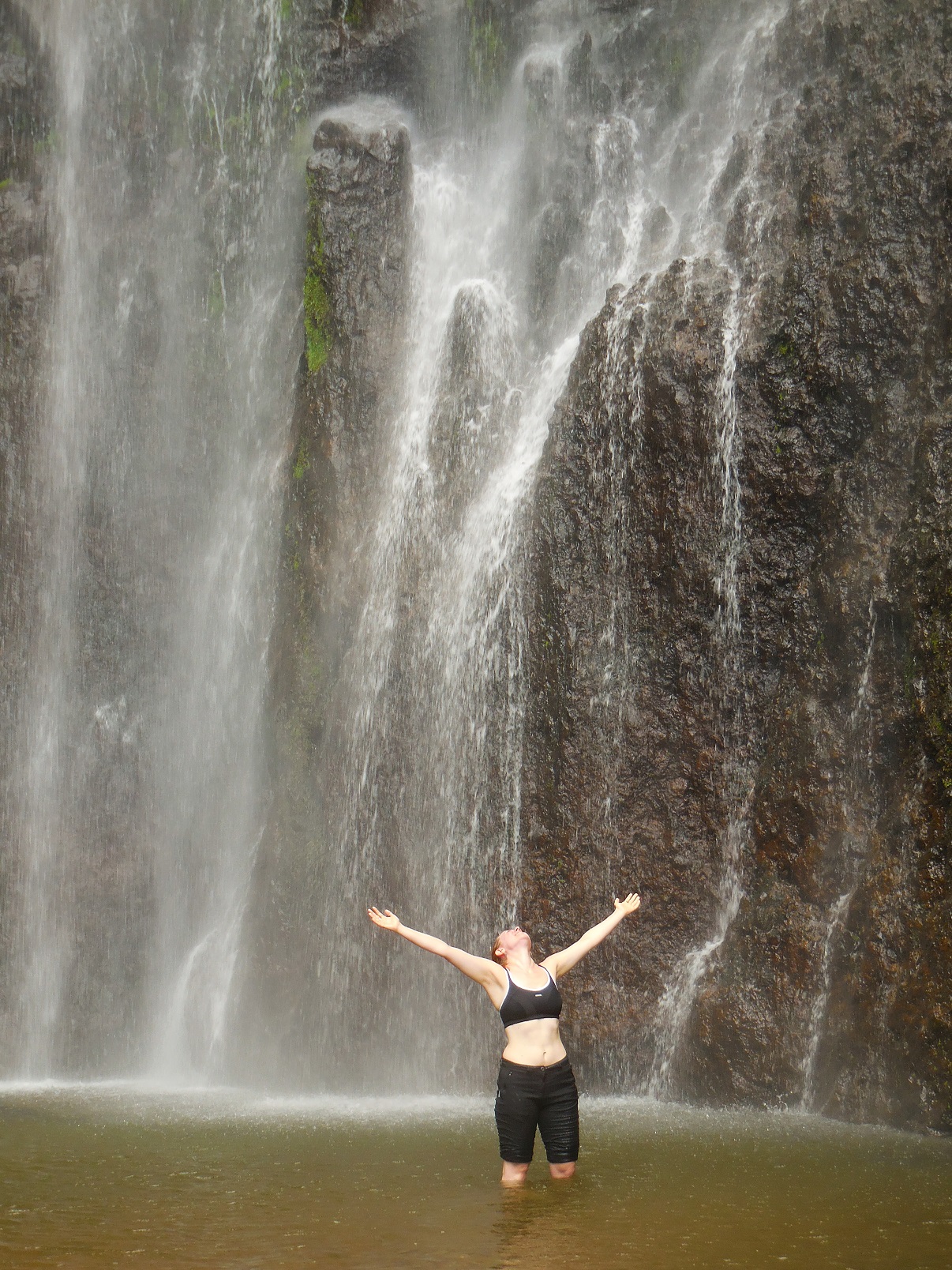
The Cascada San Ramon – on the double volcano island of Ometepe on Lake Nicaragua – is a must-see. It’s quite a hike to get up there, just an hour and a half but in sweltering heat and through steep jungle hills. But once you’re there, you’re greeted by a beautiful waterfall plummeting hundreds of feet into an icy pool.

Cascada San Ramon

Be brave, wade out into the waterfall and you’ll get a cooling shower and you can fill your bottle with pure, refreshing water from the lake that fills the crater of the Maderas Volcano.

Try: A new sport

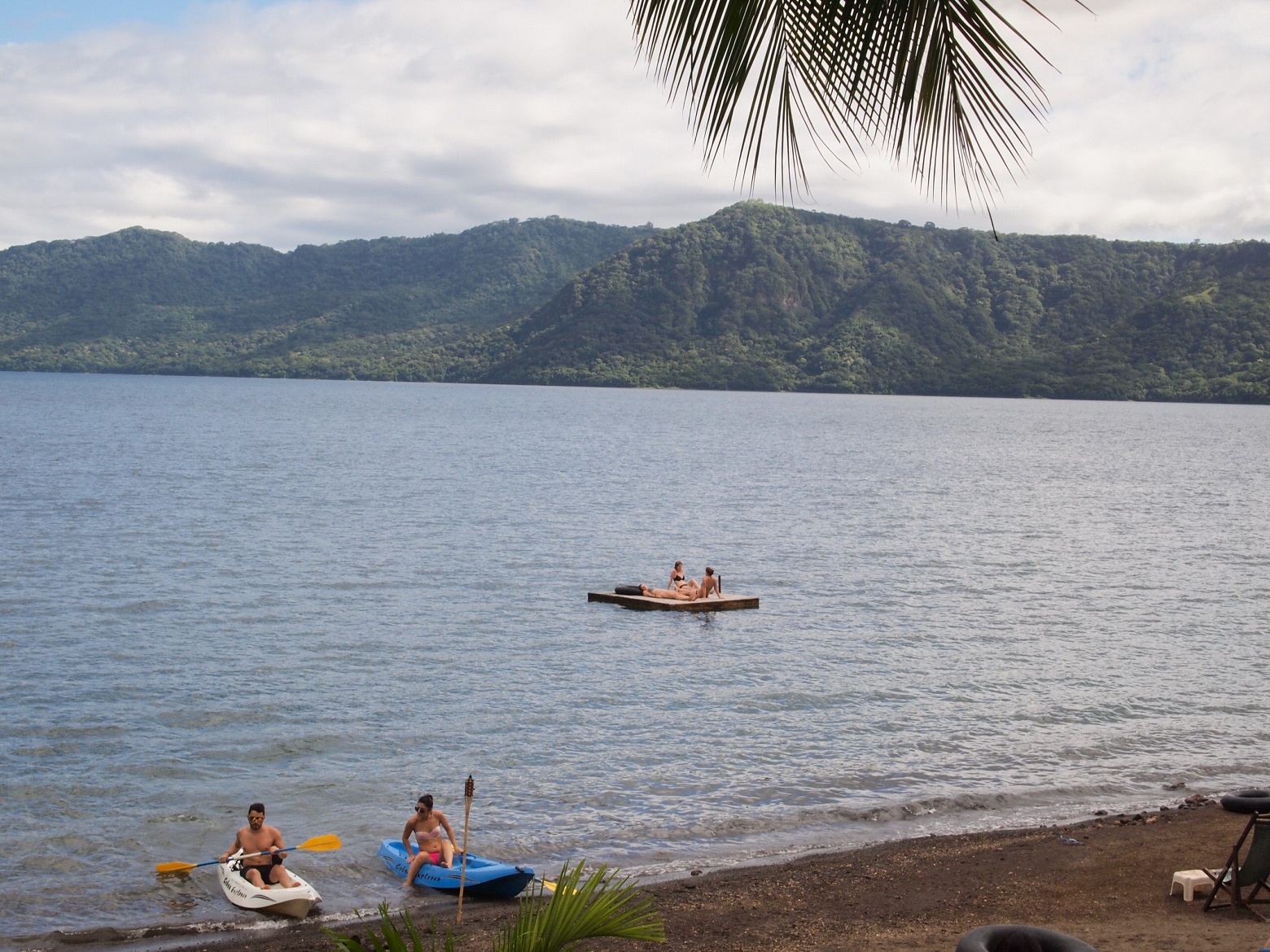
Most tourists in Nicaragua have a go at volcano-boarding, whizzing down volcanic ash at speeds of up to 50mph. Ashamed to say we didn’t find the time to do it but by all accounts it’s exhilarating. Nicaragua has plenty of adventure sports opportunities for thrill-seekers, from surfing in San Juan del Sur, diving in the Corn Islands, ziplining, sailing, hiking, climbing, kayaking and swimming in the crystal clear water of the volcanic Laguna de Apoyo.

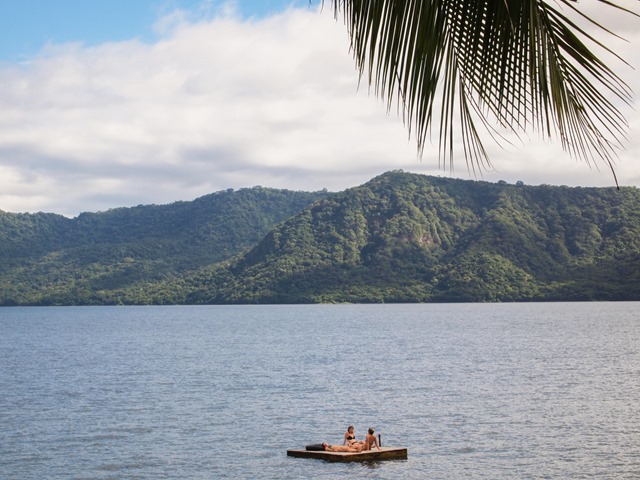
Laguna Apoyo

Buy: As little as possible.

Nicaragua is very cheap for the most part but the relatively small tourist numbers, compared to the likes of Guatemala or Costa Rica, mean the trips you’ll want to do (to volcanos, lakes and islands) are pretty pricy. So if you’re on a budget, best to save your Cordobas (dollars are accepted nearly everywhere too) for experiences you’ll never forget, rather than souvenirs you’ll probably lose.

Do: Rent some wheels on Ometepe island.

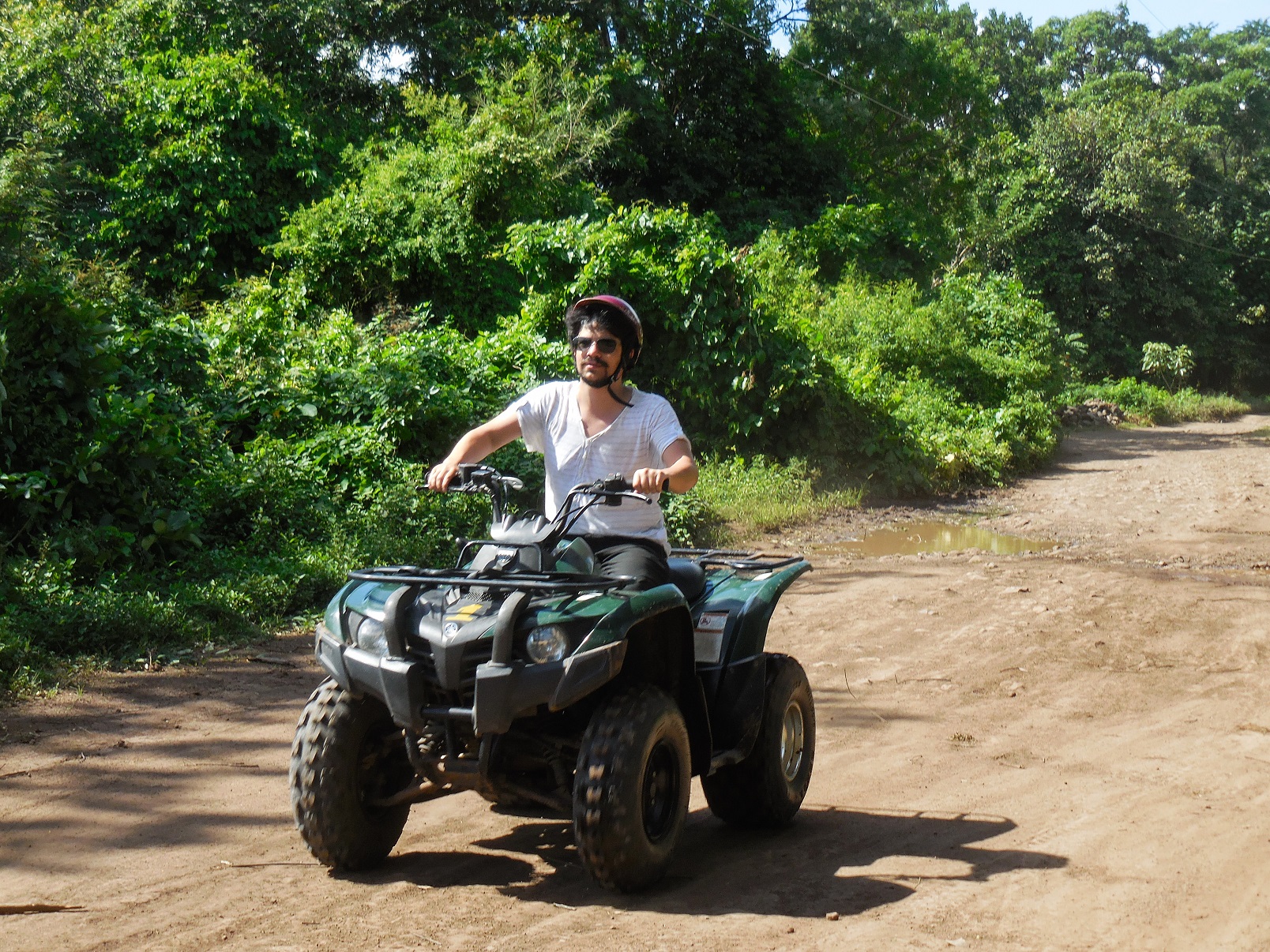
Mountain bikes, motorcycles and quad bikes are the way to get around on Ometepe, where taxis are not cheap. Between the main towns, the roads are pretty good, so biking (motor or push) is great fun. For everywhere else, there’s quad bikes.

Quad bike Ometepe

We found this was the cheapest way to get to the San Ramon waterfall. Not only that but it was damn good fun too. Watch out for cows.

Don’t: Be surprised if there’s someone else in your taxi.

The cab stops, you start to get in, then you notice there’s someone else sitting in it already. It’s not another customer but the driver’s pal or relative. This happened pretty much every time we took a cab in Granada. Might be a bit odd if you’re used to the cabs of London or New York but hey, the more the merrier.

And not forgetting…

…the transvestite marching band.

Go for dinner on the Calzada – the touristy strip coming off Granada’s Parque Central – and you’ll be pestered by a cabaret of different street artists and hawkers, with mixed abilities. By far the most bizarre was a troupe of masked people in tight dresses, most of whom were men or young boys. They appeared out of nowhere and started aggressively twerking at people trying to have their dinner. This was accompanied by an abysmal marching band who all seemed to be playing a different tune. Meanwhile a sort of gangmaster Fagin stood by our table muttering sinister oaths in a bid to make you pay up. We didn’t.

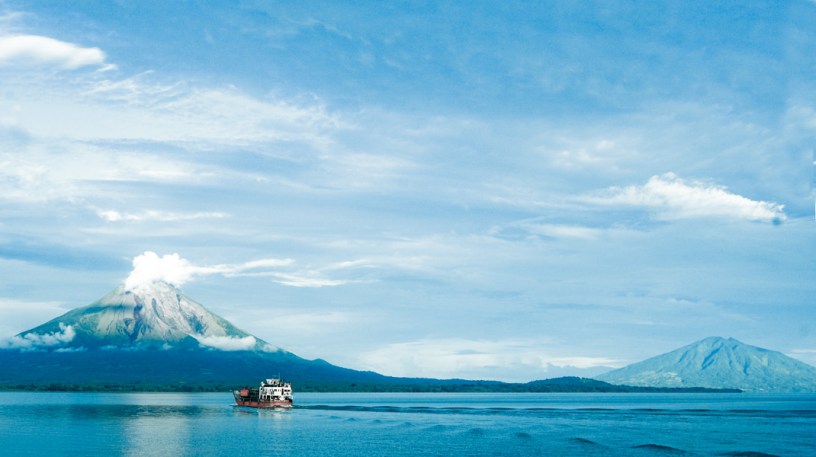
Ometepe Island

Nicaragua: A song of water and fire

Not for nothing do they call Nicaragua the Land of Lakes and Volcanoes.

A chain of volcanoes runs down the Pacific side of the country, seven of which are active. Of the extinct ones, many have since filled up with water, creating beautiful crater lakes. The combined surfaces of Lake Managua and Lake Nicaragua make up almost 10 percent of the country’s total area.

But in the limited time I spent in Nicaragua, this combination of opposing forces – water and fire – seemed to me to have a significance beyond accurately describing the local geological features.

It is, after all, a country with a coast on both the Atlantic and Pacific. On the Caribbean side, locals speak English creole. On the Pacific, surf bums and American retirees jostle for space around the crescent-shaped bay at San Juan del Sur. And all around them locals drop their S’s providing a marked change (and challenge) for Spanish-speaking tourists.

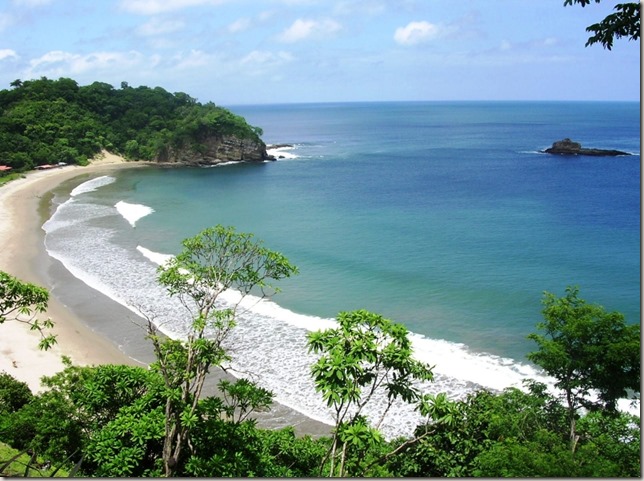
San Juan del Sur San Juan del Sur

It is a land rich in natural beauty but with acute human poverty. It is a country that, in 1980, won a UN award after managing  to bring its literacy rate up from just 50% to 78% in just six months. But it’s also a place where children walk to school through piles of rotting, burning, often toxic, garbage (and not just the ones who live on the four square mile rubbish dump, La Chureca).

It is a nation that in 2012 passed a law to formally criminalise violence against women and then a year later scaled it back after religious organisations and men’s groups claimed it was discriminatory towards men and was leading to family break-ups.

Meanwhile all I kept reading was how beautiful the country was, how it had all the draws of Costa Rica without the hefty price tag. Everywhere I looked it was being described effusively as an  “adventure destination” on account of the huge array of outdoor activities on offer. This breezy summary seemed somehow to jar with everything else I’d read or heard about the country. But just as it’s possible to visit a country as a tourist without ever scratching beneath the surface, so it is possible to get bogged down in the political or social ugliness of a place and fail to see its beauty.

Laguna ApoyoLaguna Apoyo

Much as I believe it is important to engage with the context in which you travel, I also think it’s important sometimes to let go and simply experience a place. Happily Nicaragua allows you to do both.

We didn’t initially plan on spending any great length of time in the country, barring a job I had set up in Managua. In the end we spent a week there. It wasn’t enough to do and see even half of what the country has to offer.

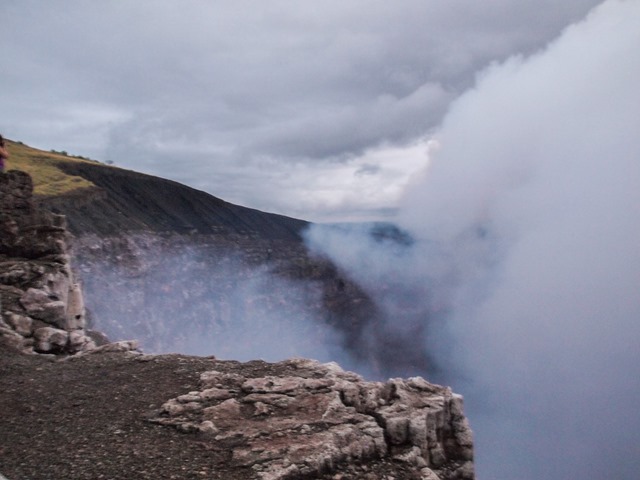
We did not, for example, make it to the beautiful colonial city of León, in the north. Nor did we hike its surrounding volcanoes, or have the chance to “snowboard” down them as many do at Cerro Negro. We didn’t get to surf at San Juan del Sur or go snorkelling off the Caribbean Corn Islands. But we did hang out in colonial Granada, rent quad bikes on Ometepe Island and stand beneath a 180 metre waterfall in the jungle. We swam in a volcanic lake, mountain biked to natural springs and even braved the toxic gases billowing out of the crater of Volcan Masaya in order to peer over the edge at the glowing orange lava.

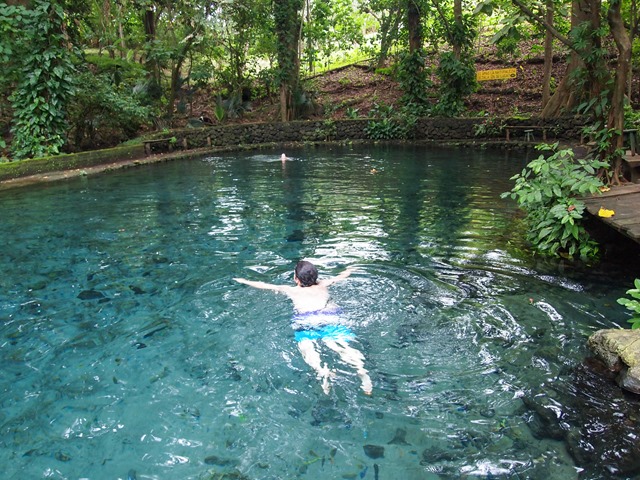
Ojo de agua omepete Cooling off in the Ojo de Agua springs

But despite the easy comparisons, Nicaragua is not Costa Rica. And it is not even close to providing the kind of touristic infrastructure that would allow it to catch up with its wealthy neighbour.

Arriving in Managua around 8pm on a Friday we discovered that the public buses to Granada, just under an hour away, had stopped running for the night. Left with no choice, we took a taxi for $35 (£22).

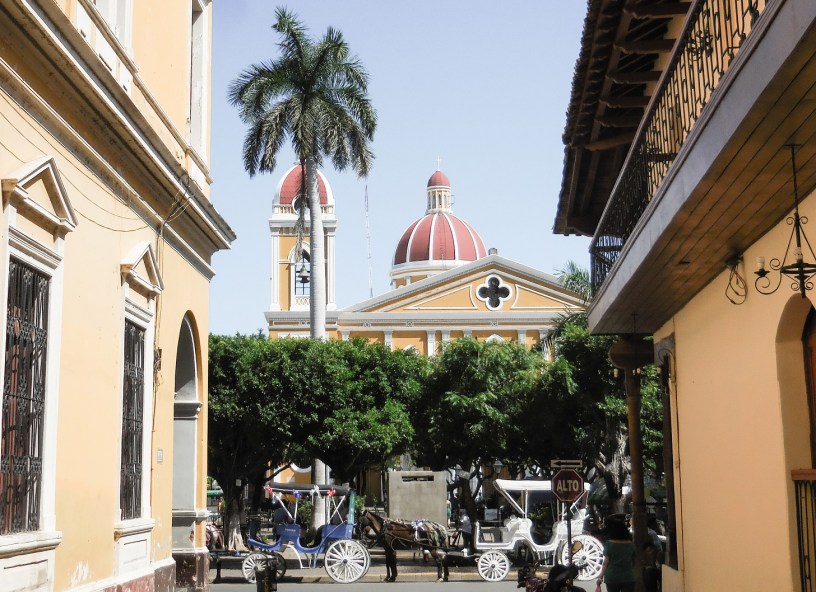
Granada NicaraguaGranada

Based in Granada, I was able to get into Managua for work (the public bus costs around 25 cordobas or $1 each way but be warned, in rush hour it can take over two hours) and it allowed us to spend the weekend sightseeing. However, once again we discovered that the means of doing so were limited and the prices were significantly higher than we’d been used to.

Day trips, for example, are surprisingly costly. Having paid a mere £13 ($20) each for our entire day out in Semuc Champey, Guatemala, we were more than a little bit surprised when our combined visit to Laguna Apoyo and Volcan Masaya racked us up a bill of £40 ($60) apiece. And yes, technically you could take the public bus to the entrance but you would then be facing a bit of a trek as both the lake and the volcano are situated several miles in from the main road.

This is largely to do with demand. Statistically Nicaragua is the safest country in Central America but despite this it welcomed 1.2 million travellers in 2013, compared to almost 2 million in Guatemala and 2.4 million in Costa Rica. Consequently it cannot access the same economies of scale, i.e. no group discounts. When we booked the Apoyoa/Masaya tour we were the only two people on the list. The travel agent promised that the more people signed up, the cheaper it would be. No one else signed up.

Volcan MasayaVolcan Masaya

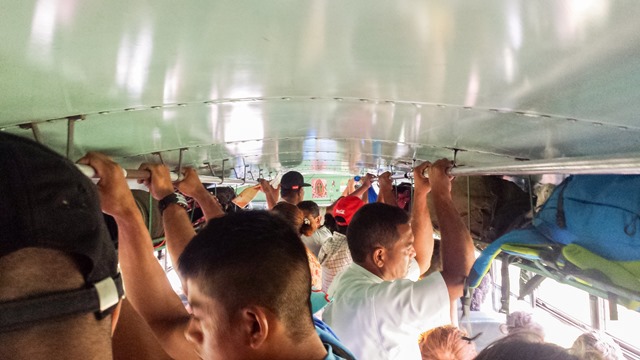
It isn’t just the organised trips either. Travelling between places was more difficult than we’d found elsewhere. Sometimes all this meant taking a public bus (or three) and what this lacked in convenience it made up for in cost. To get from Granada to Puerto San Jorge, on the shore of Lake Nicaragua, we took a bus from the main bus station behind the market on Calle Atravesada. For around 30 cordobas ($1.20/£0.80) each it took us to a junction somewhere outside Rivas. Here we were herded off and onto a second bus where we paid a further 10-15 cordobas to travel the remaining ten minutes or so to the port. We spent the entire hour-long journey standing up, wedged between a backpack and man selling bags of nuts but it cost us less than a fiver.

Chicken bus

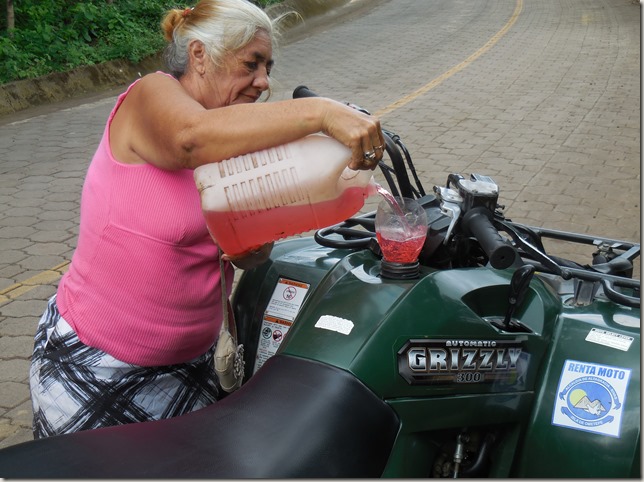
But sometimes the road less travelled is less travelled for a reason. On Ometepe – an island made up of two volcanoes, one active, one extinct, linked together in the middle of Lake Nicaragua – we were quoted £50 ($70) for a taxi to take us just a few miles from our hostel on Playa Santa Domingo to the bottom of the San Ramon waterfall trail. Aghast, we said we’d take the bus, only to be told no local bus would be passing that morning. The only other option, we were informed, was to rent a quad bike or a motorcycle for five hours at a price of around £30 ($55) plus gas.

Quad bike OmetepeFilling up the tank, Ometepe style

We allowed our arms to be twisted, assuming we were paying the price of being a captive audience. But then we saw the roads. I’ve driven on dirt roads before but this was something else: great muddy ruts, deep puddles, huge churned-up piles of rubble such as would ruin any normal car. Suddenly that £50 taxi fare seemed completely understandable.

Quad bike Ometepe Rush hour on Ometepe

It ended up being one of the best days out we had in Central America. Sometimes when plans go awry you end up having even more fun.

Nicaragua is where I learnt to expect nothing and embrace everything. We missed a ferry because we were told three different departure times by three different sources (internet, fellow travellers, locals) and had no idea who to believe. We stood at a bus stop in the midday heat only to discover the bus we’d booked had passed through two hours prior to the time indicated on our ticket. We were refused advance tickets for a bus that was “full” but when we happened to see it passing, we were able to not only get on but bag ourselves two plum seats.

In the land of lakes and volcanoes I learnt about the terrible disadvantages faced by so many but through my work I also met and spoke to the organisations working to try to change that. I saw the terrifying results of unequal access to resources but I also heard the inspiring stories of people who have overcome the odds.

I spent a morning swimming in the cool waters of Laguna Apoyo and the afternoon braving the heat at the crater of Volcan Masaya. And that’s the impression that will stay with me.

Ometepe island

Booze of the World 2: Guatemala and Nicaragua

The second instalment of Booze of the World sees Rob take on Central America, including the world’s best rum

Guatemala

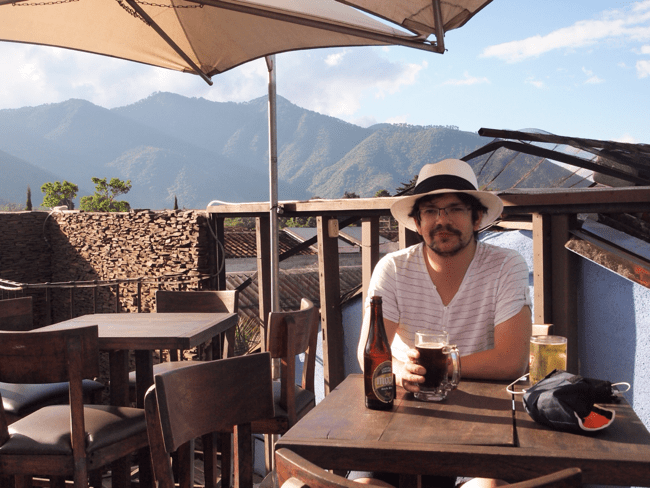
Beer: Back when I first visited in 2003, there were pretty much two beer choices: Gallo (the cockerel logo adorns a million backpackers’ T-shirts) or Moza. Both are made by the Cerveceria Centro Americana, owned by Guatemala’s powerful Castillo dynasty.

Gallo, at 118 years old the country’s first brew, is the archetypal Central American beer: weak, pissy sub-lager with zero flavour and enough gas to power a small industrial city. It resembles Budweiser in that it tastes of nothing, but plasters its name across everything. I was always a Moza man and to this day it’s my favourite of what Guatemala has to offer beer-wise. It’s a dark Bock-style beer, richer and more flavourful than Gallo with a slight brown sugar aftertaste that suits my sweet tooth.

There are a few other brews finding their way onto the menu in most bars and hostels these days though. The first is Brahva, owned by global giant AB InBev who (according to this BusinessWeek article) are keen on buying Cerveceria Centro Americana.

Unsurprisingly, given that AB InBev make Budweiser, Brahva is if anything like a watered down version of Gallo and to be avoided at all costs. AB InBev’s muscle allows them to undercut Gallo on price too, which should worry anyone who values local production over many-tentacled multinationals. Brahva makes me want to drink Gallo and that shouldn’t happen to anyone with tastebuds.

CCA’s Victoria is also growing in popularity. I prefer it to Gallo but it doesn’t offer much in the way of choice given that it’s also a pale lager. Same goes for their Cabro and Monte Carlo brands…different label, same marginally tweaked weak fizz.

I’d stick to the Moza every time but that’s very much a minority view in Guatemala. And ales? Forget it.

Beer with a twist: One odd quirk I was introduced to in Guatemala this year – although I believe it comes from neighbouring Mexico – is the Chelada and its spicier cousin the Michelada. The former involves adding lime to your beer and salting the rim of the glass, as you would with a Margarita. The latter is much the same only with a variety of spices, or tabasco, added as well.

They both sound hideous. Which is because they are, although i can imagine the limey Chelada might work on a very hot day. Still, if you’re drinking Brahva or Gallo, any added ingredient short of cyanide might be an improvement.

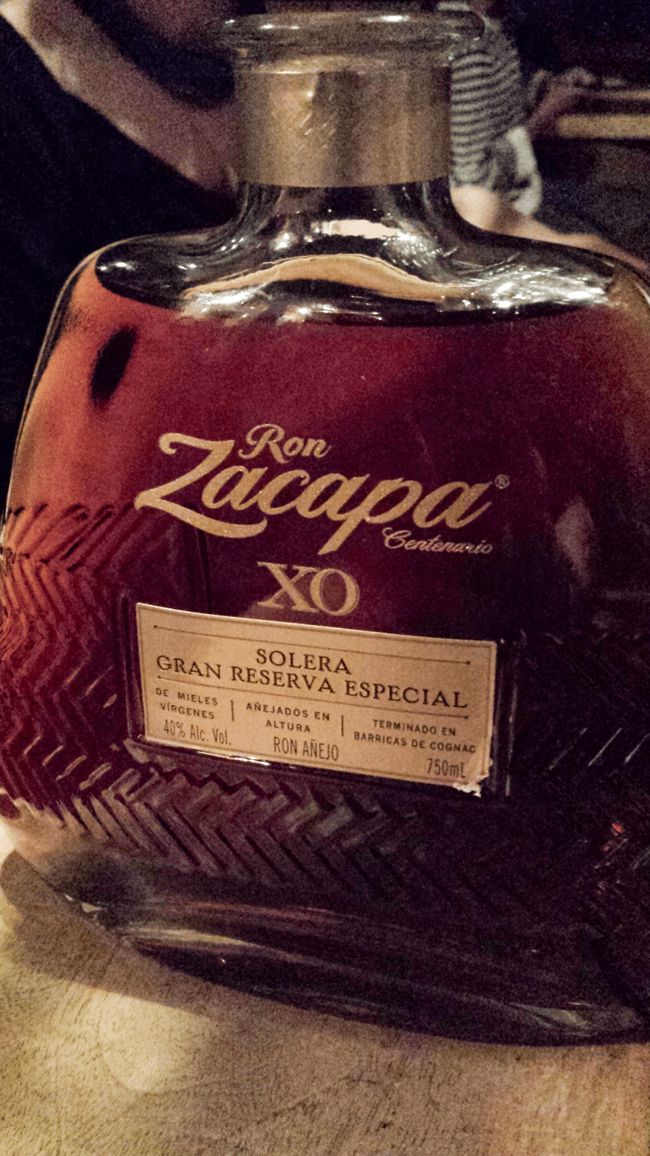
Rum: NOW we’re talking. You’d expect the world’s best rum to come from Jamaica or perhaps Cuba. Not according to many rum experts, who put Guatemala’s Ron Zacapa at the top of the tree. Or should I say the sugar cane.

Its success is despite the fact that its history is relatively brief. It was first produced in 1976 to celebrate the 100th anniversary of the eastern Guatemalan town of the same name. They say its quality is down to being stored at altitude in the volcanic highlands. I sampled the stuff in a little wine and rum shop in Antigua, Guatemala almost directly under the famous arch of Santa Catalina.

When I was last in Guatemala there was no way I could have afforded a glass of Ron Zacapa. Much the same is true now but I felt I had to do my duty for Booze of the World. Altruistic, right?

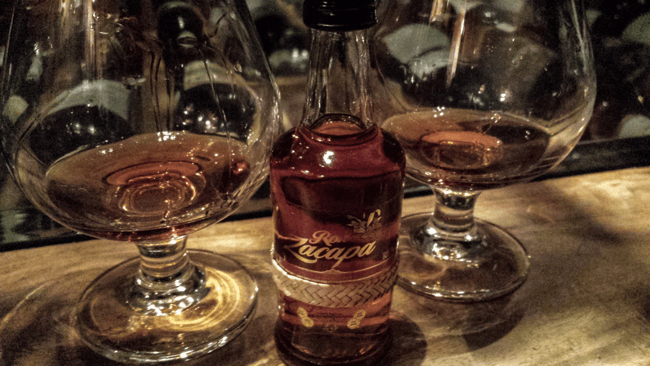
I sampled both the 6-to-23-year-old Zacapa Centenario and the XO, the premium option at 6-to-25 years old. Both embrace you with their warmth from the first sniff, the vapours filling your lungs and circulating a fuzzy glow around your whole body. While the XO is the super-premium brand, I found it almost too subtle. It was so smooth that it lost something of the sugary mouth-burn I like about rum.

The Centenario was a revelation though. Multi-layered, nutty and caramelly without being sickly, with a long aftertaste. You’ll pay top dollar for this stuff anywhere outside Guatemala but if you like rum, you need this in your drinks cabinet.

NB: If you even THINK about putting ice in this, please reseal the bottle and give it to someone who deserves it. And if the word ‘Coca-Cola’ enters your mind, seek professional help.

Quetzalteca: Every country has at least one traditional drink of the people and this is the main one for Chapins (Guatemalans). Named for the Quetzal, the colourful bird that also gives Guatemala’s currency its name, this is a bit like an eau de vie. There are several flavours but I tried the Rosa de Jamaica. It packs a punch but not the body-shuddering donkey-kick you get with some traditional hooches of the peasantry. Surprisingly drinkable although i’m not one for neat spirits.

Nicaragua

Beer: Guatemala ain’t great for beer but Nicaragua is worse. On the first night I tried the Toña, which tastes like someone spilled a thimbleful of Budweiser in your Evian. That’s being kind. A step up from that is Victoria, a pilsen which has a bit more character but is still (can you sense a pattern emerging in Latin America) a pretty uneventful pale lager.

Still, in the baking heat after a long hike in the mountains, it might as well be Ambrosia. Ever seen the film Ice Cold in Alex (look it up here)? Extreme heat is the only way to make Nicaraguan beer taste good.

Oh, there’s also one called Premium aimed at the higher end of the market although the only thing premium about it is the name. All three are produced by Compania Cervecera de Nicaragua, which is in serious need of some competition.

Rum: Nicaraguans are proud of their Flor de Caña and you can’t blame them. It’s got much more character than your bog-standard high-street rum and there are some premium versions too. I can’t say I gave this one the same consideration as Guatemala’s Ron Zacapa but then, once you’ve had Ron Zacapa, everything else pales in comparison.

What else?: It’s usually not worth ordering wine with dinner in Guate or Nicaragua unless you want to drink something dreadful or pay top dollar. Franki and I chose to have a few dry meals rather than shell out the same price we’d pay in London for some dodgy ‘vino tinto’ from the part of Argentina they clearly reserve for ‘countries we don’t mind offending’.

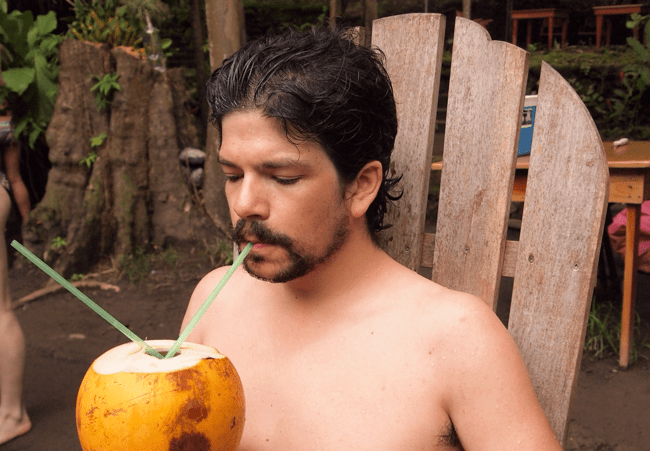
As a footnote, no country with a Caribbean coast is ever without the option of a Cocoloco, a coconut sliced in half with a machete and then sloshed with rum to add to the delicious nectar within.

The verdict

Top tipple: It can only be Ron Zacapa. I prefer the Centenario but if you’re the kind of person who likes the most expensive label, give the XO a whirl. Either way, you’ll be feeling more cosy and warm than a Werther’s Original advert.

Gourmet’s choice: Ditto. In this case the most expensive is also the best.

Bubbling under: I’m a sucker for Guatemala’s Moza. Slips down nicely after a day in the limestone pools of Semuc Champey, climbing a volcano or sweating through the jungle of Tikal.

What to slur drunkenly: Arriba, abajo, al centro, pa’dentro (Rough translation: “Glasses up, glasses down, glasses to the centre and down it”, said as you slosh your glass about to the relevant motions. Very touristy but fun.)

Next stop on Booze of the World: Colombia


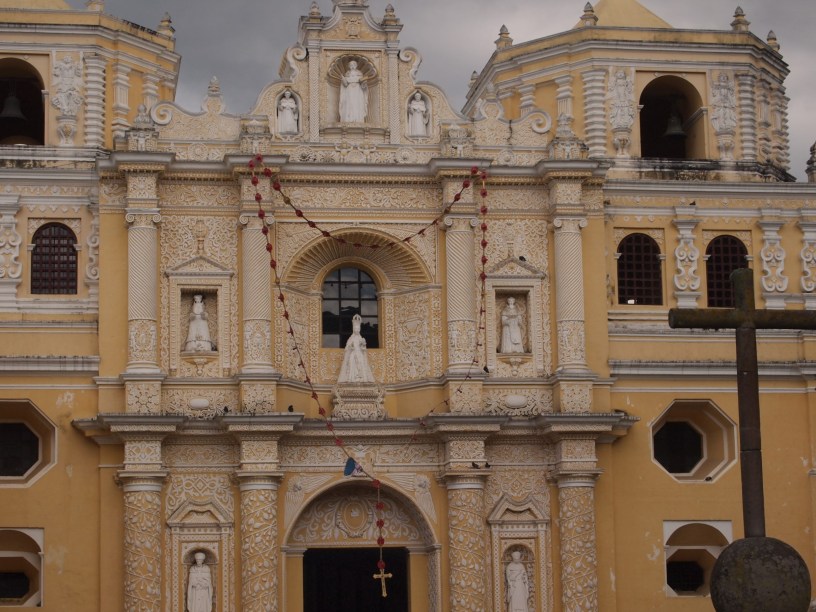
La Merced Antigua

Guatemala: The Debrief

What we did and what you can do too…

Eat: Arroz (rice), frijoles (refried beans) and aguacate (avocado)

This isn’t really advice because you’re not going to have much choice in the matter. These three staples crop up at breakfast, lunch and dinner. Good thing they’re usually lovingly prepared and delicious.

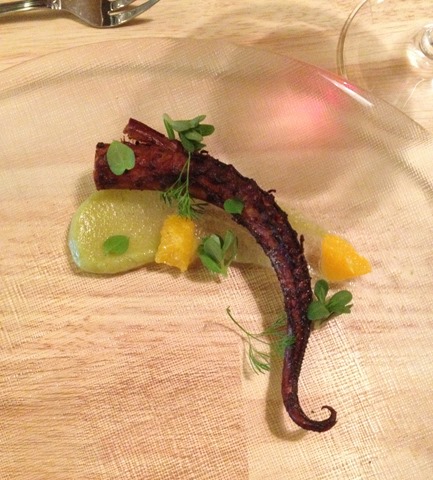
For a refined take on Guatemalan cuisine, try Flor de Lis in the Paseo Cayala complex of Guatemala City. The capital isn’t popular with backpackers but if you’re there for one night this culinary newcomer is the place to go. The ethos is traditional Guatemalan ingredients served in ultramodern European-style. The Q270 (£23) seven-course degustation menu changes according to the season. Highlights for us were the tender grilled octopus, a delicious mushroom tartar served with creamy cheese on a salt wafer, and a rich risotto.

Flor de Lis Guatemala City

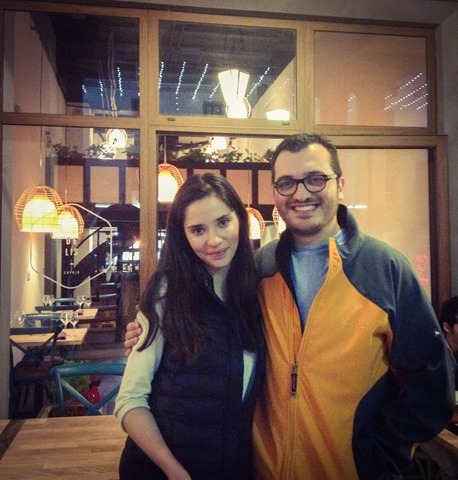
Full disclosure: The owner, Harold Caballeros, is an old uni pal of Franki’s but even so his new venture surpassed our expectations. Plus he and his fiancé Monique are completely lovely. If you bump into them, say hello!

Flor de Lis Harold Caballeros

Drink: Ron Zacapa

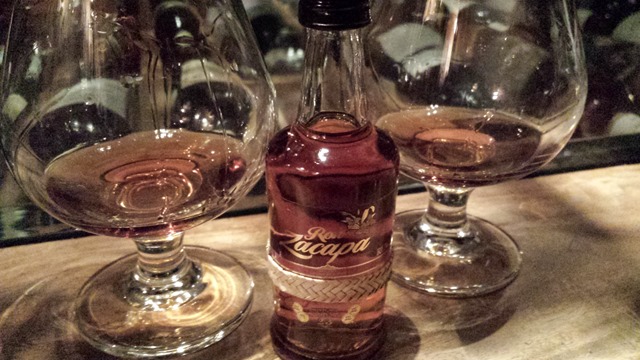
Rob will cover this in more detail in the next Booze of the World, but this multiple award-winning rum sugary paradise in a glass and well-deserving of its reputation as being the world’s best.

Ron Zacapa

Try: Climbing a volcano

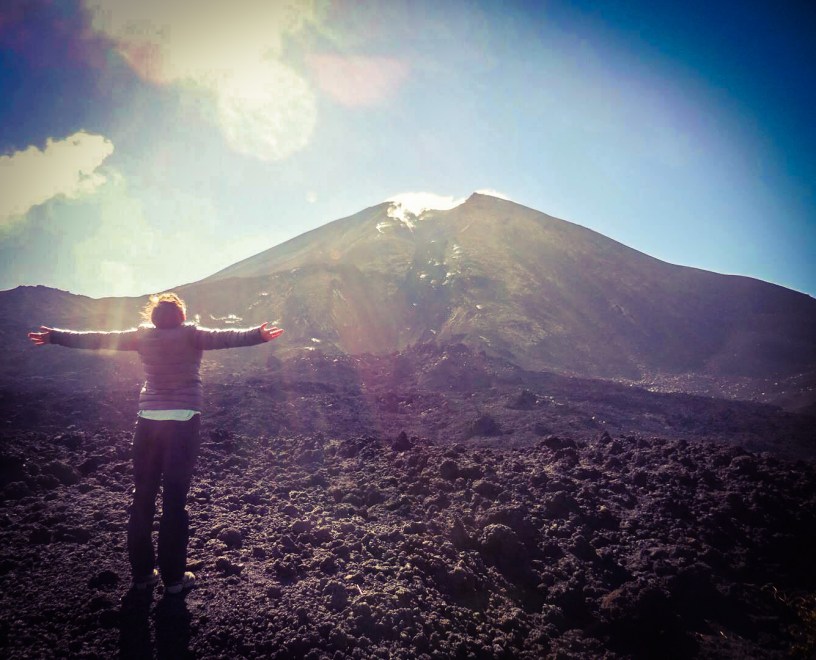
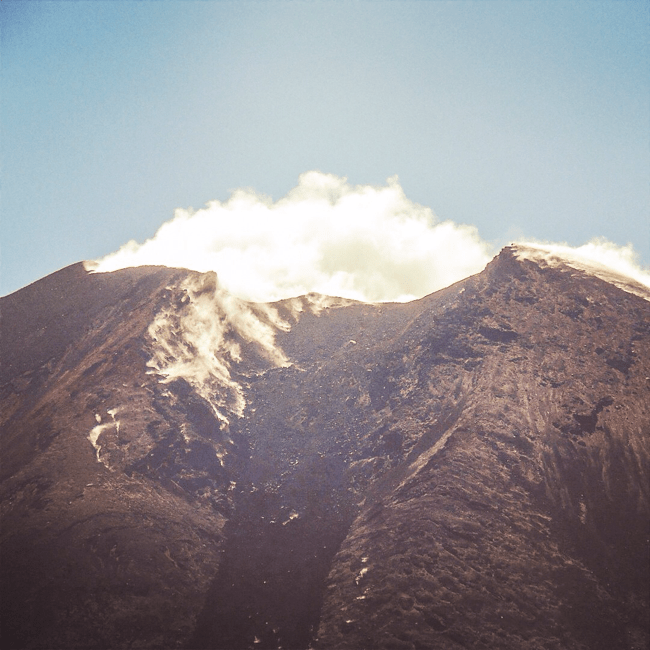
Pacaya (described in 5 cool things to do in Guatemala) is the least challenging and an easy day-trip from Antigua. Hardened hikers can also have a crack at Agua, Acatenango or some of the volcanoes around Lake Atitlan. There’s nothing like getting up close and personal with a smoking crater to thrill you with the gargantuan power of nature and it’s ability to give and take in equal measure. No wonder the Mayans worshipped them.

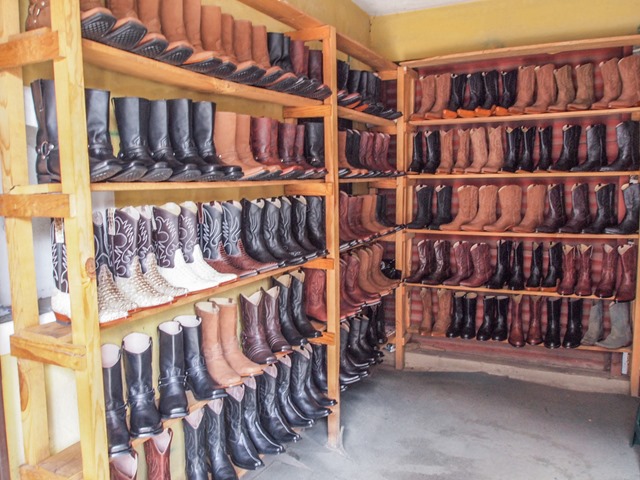
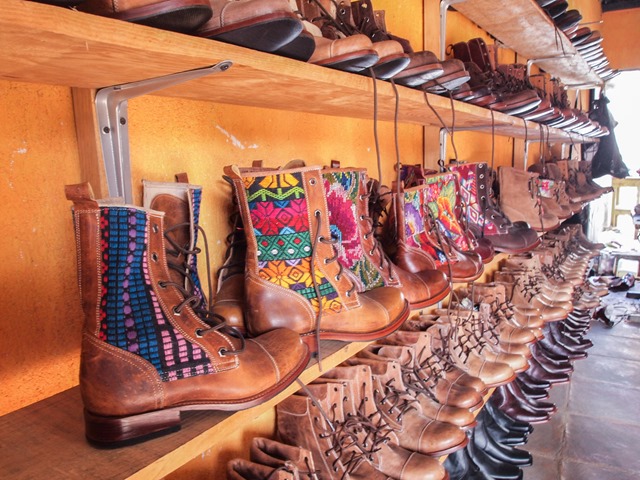
Buy: Leather boots in Pastores

This tiny town, just 20 minutes outside Antigua (buses depart regularly from the main bus terminal and cost around Q5 each way), specialises in leather goods, most notably cowboy boots. Having had her favourite pair of boots fall apart in Week Two, this was too good an opportunity for Franki to miss.

The town is little more than a main strip, consisting almost entirely of leather workshops and shoe shops.

Buy boots in Pastores

Walk into any store and you’ll most likely find a cobbler sitting at his machine, scraps of suede and leather around his feet, while his finished goods line the shelves. The stores have long served the local farmers and ranchers only now they’ve cottoned on to the fact that tourists go crazy for the boots as well. The classic cowboy style is still available but the now do rounder-toed versions in plain leathers (as opposed to yellow snakeskin, for example), as well as leather lace-ups, Chelsea boot styles and brightly coloured versions incorporating traditional Guatemalan textiles. Prices tend to start around Q300 (£25).

Cowboy boots in Pastores

All the boots and shoes are hand-made and if you’re going to be in town for a while, you can even order a custom pair, made to your exact measurements. However, as a pretty regular European Size 37, it wasn’t hard to find something that fit. In fact, were money (and, crucially, luggage space) no object, Franki could easily have come back with about five pairs of these gorgeous boots.

Buy boots in Pastores

Do: Take the Chicken Bus

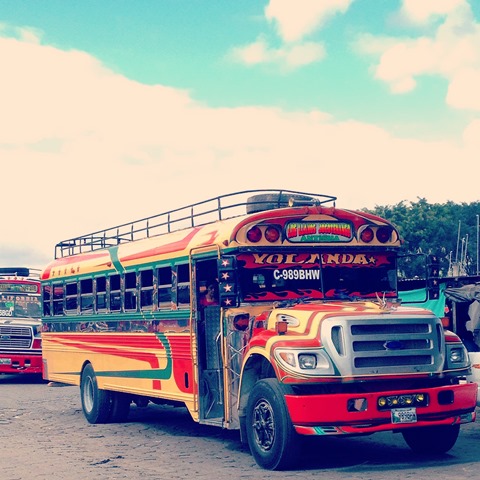
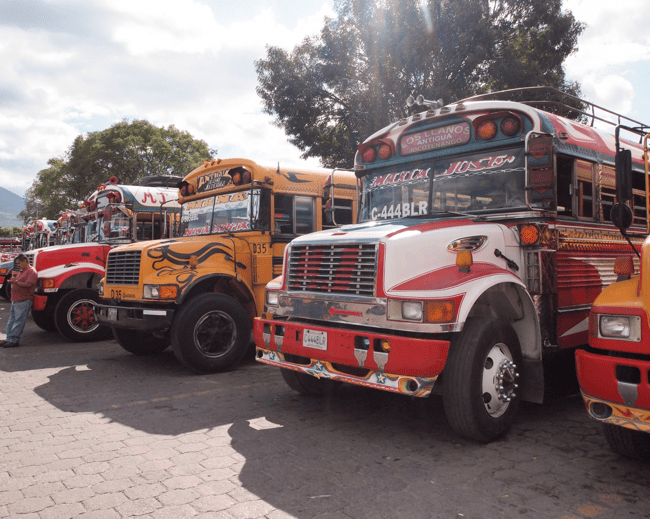
The colourful public buses are a regular sight on Guatemala’s roads. All flashing lights and clouds of black exhaust fumes, these second-hand American school buses have been painted, named (usually after women – look out for Yolanda, Esmerelda, Maria-Jose, among others) and more often than not equipped with a booming sound system which pumps out merengue-pop.

Chicken bus Guatemala

The availability of low-cost shuttle services between the major tourist stops mean it is not necessary to use them but it’s something you should try to do at least once for the experience. Usually packed to the rafters with both people and animals (they’re not called chicken buses for nothing), they’re best for shorter journeys… such as Pastores.

Don’t: Assume that your air-conditioned bus will actually be air-conditioned

If you’ve travelled in Latin America you will no doubt be familiar with the Arctic conditions on most long-haul coach services. If you haven’t, you will no doubt have heard about them. The perils of failing to wrap up warm are well documented in the blogosphere. So, not wanting to fall foul of one of this oft-cited tip, we diligently donned our long sleeves, Heattech leggings (Franki, not Rob), and jumpers for the 12-hour trip up to Tikal.

About two hours in, the AC was inexplicably switched off and we spent the rest of the journey sweltering as the humid heat outside mixed with the equally sultry atmosphere inside the packed coach.

And this wasn’t the only occasion. On the way from Flores to Lanquin, a fellow-traveller boasted how he’d paid an extra $5 to take the air-conditioned bus, only to find himself crammed into the same sweaty mini-van as us. It seems the legendary freezers-on-wheels that populate the roads of South America, have only nominally made their way north to Central America. As with promises of hot water, free wifi, and English-speaking staff, it’s best to take any mention of AC with a hefty grain of salt.

And not forgetting…

…the time we experienced an actual earthquake! It was only 5.4 on the Richter Scale but when you’re not used to feeling the whole world shake beneath you, that’s pretty damn exciting. Plus we got to fill in this oh-so-scientific online quake-o-meter picture quiz:

Earthquake chart

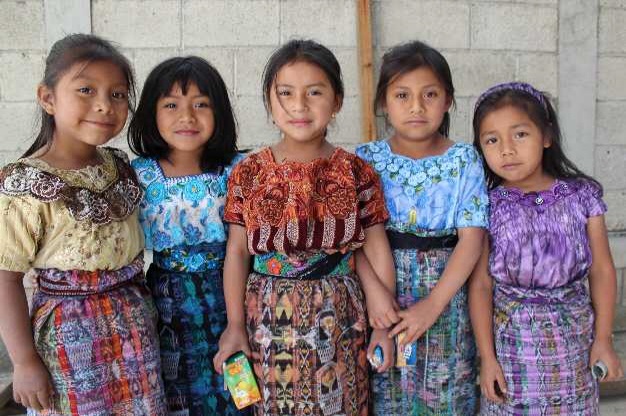
Mayan children

The CIA and malnutrition: Guatemala’s shackles, past and present

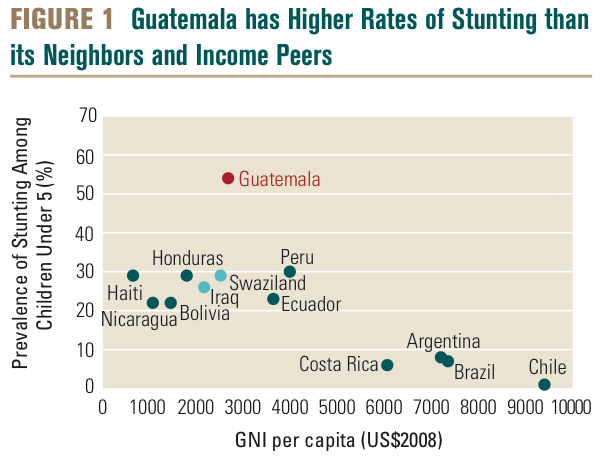
Think for a moment about the parts of the world we associate with malnutrition. Sub-saharan Africa during an acute famine, natural disaster zones, or impoverished regions of the Indian subcontinent. It may come as a surprise that Guatemala is the world’s third worst country for chronic malnutrition, behind only Haiti and Angola.

Sometimes called the Land of Eternal Spring – this lush and verdant country has an abundance of food thanks to plenty of rain, sunshine and astonishingly fertile volcanic soil.

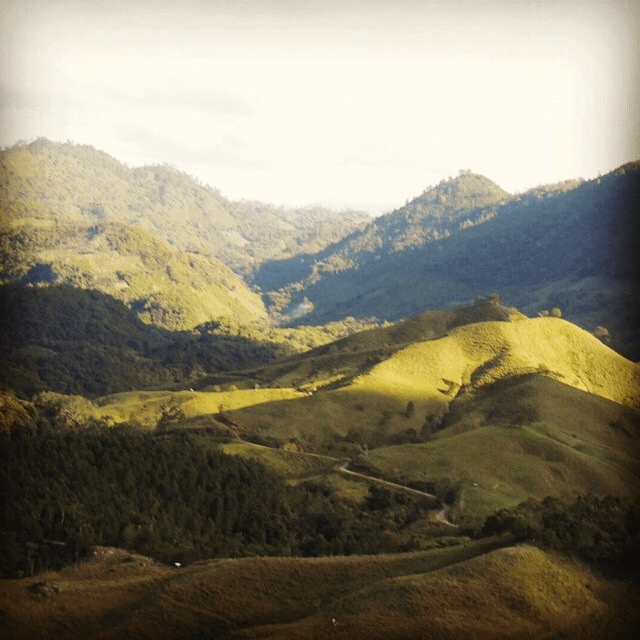
Hills above Lanquin

Local markets feature some of the plumpest, most colourful fruit and vegetables you’re likely to see. So why are children being permanently damaged, even killed, by malnutrition?

One huge problem is that in many Mayan communities, for the most part far poorer than their Latino compatriots, children are well fed but badly fed. There is seemingly no limit to the Central American sweet tooth and among Mayans this is even more pronounced. The same globalisation that has done little for their economic prospects has brought with it a wave of addictive but highly unhealthy sweet treats.

Last week I sat on a boat on Lake Atitlan and watched as a Tz’utujil Maya mother fed her gorgeous little girl a chocolate-covered banana, chewing gum and some stuff that looked like a sugary Knorr stock pot, all in the space of five minutes. The mother was obese and her teeth were nearly all gold.

One Guatemalan NGO worker I spoke to, who specialises in battling malnutrition, reported infants being plied with Coca-Cola but not breast-fed. As far as food crops go, it’s largely corn in the form of tortillas, some frijoles, but precious little in the way of vegetables.

The result, in many cases, is stunted development of both brain and body, tightening the grip of Guatemala’s poverty trap.

A malnourished child cannot learn and so, later in life, cannot earn enough to improve the prospects of his/her own child. Provision of education is also poor in remoter rural areas, while many children don’t attend school at all. So there is little chance of them breaking the cycle by learning about nutrition outside the home.

Throw into the mix a lack of clean water, meaning infants and small children often suffer from diarrhea, preventing them from absorbing even the meagre nutrients on offer.

Coupled with the scourge of malnutrition is the other great plague that has dogged Guatemala – violence.

I don’t want to give the impression that Guatemala is a dangerous place to visit – for the most part it isn’t. Tourists who behave sensibly (don’t go waving your smartphone around at midnight on a dark street) are unlikely to encounter any trouble.

Sadly though, like most countries on the drug export trail up to the United States, Guatemala has a problem with criminal gangs.

Gang members in Guatemala

Guatemalan gang members (Source: http://www.dailytelegraph.com.au)

That’s thanks in part to the steady American demand for party favours, with the import supply chain outsourced to its poorer, less well-policed neighbours.

But there is something more deep-rooted than even the drug trade behind Guatemala’s ongoing struggles to address crime and poverty.

It is still recovering from the legacy of a civil war that lasted, astonishingly, from 1960 to 1996 and saw up to 200,000 people killed or ‘disappeared’. The war was waged, for the most part, by US-backed  government forces against the Mayan population and Ladino (mixed Hispanic and indigenous) leftist guerillas, who often turned to indigenous people for food and shelter.

Mayans hold crosses, with photo of victim of Guatemala civil war

Mayans mourn civil war victims (Source: http://www.timhoiland.com)

The grubby pawprints of American foreign policy are all over this tragic period in Guatemala’s history. Here’s a brief outline of Uncle Sam’s involvement:-

In the 1950s, US politicians were terrified by the emergence of left-wing potentially Soviet-friendly governments in Central America. In the case of Guatemala, they were increasingly minded to interfere with Guatemala following the election of President Jacobo Arbenz, who favoured land reforms to redistribute farmland away from a tiny elite, spreading it more widely among the rural poor in the hope of enriching them.

Jacobo Arbenz, former president of Guatemala

President Jacobo Arbenz (Source: http://www.carlosarmandosotogomez.com)

We don’t know whether the Arbenz government would have achieved its aims because he made one crucial mistake that meant no-one would ever find out. Much of the land he wanted to redistribute belonged to US firm the United Fruit Company. Luckily for UFCO, they had friends in high places. Secretary of State John Dulles and his brother Allen, CIA director, both had significant ties to the company and an interest in its prosperity. Between them, they managed to convince the Eisenhower administration that Arbenz was a dangerous Communist, rather than (as many historians of the region say he was) an exponent of a pretty benign left-wing ideology.

John Dulles and President Eisenhower

John Dulles and President Dwight Eisenhower (Source: Wikipedia)

Here’s the fiendishly ingenious and skin-crawlingly sinister part. The CIA sponsored an invasion that consisted of little more than a handful of right-wing Guatemalan forces. Using fake radio broadcasts ‘reporting’ major military victories that never happened, coupled with a relatively small degree of US air support, they intimidated the Arbenz government into capitulation. The new president fled and any prospect of organic democratic political development faded into nothingness.

What followed was more than three decades of brutal military rule, coups and counter-coups, in which armed patrols roamed the country perpetrating genocidal warfare, largely against a mostly defenceless Mayan population. Documents released subsequently revealed that the CIA provided vital support to genocidal militias throughout this bloody period, even as they carried out the worst atrocities imaginable – foetuses cut from the wombs of mothers, children smashed to death against walls, villages burned to the ground, rape, summary executions and much more.

A peace accord, brokered by the UN, was signed with leftist guerillas in 1996. But incredibly one of the (alleged) perpetrators of the CIA-backed coup and the atrocities in the civil war, General Efrain Rios Montt, managed to remain in frontline politics long after.

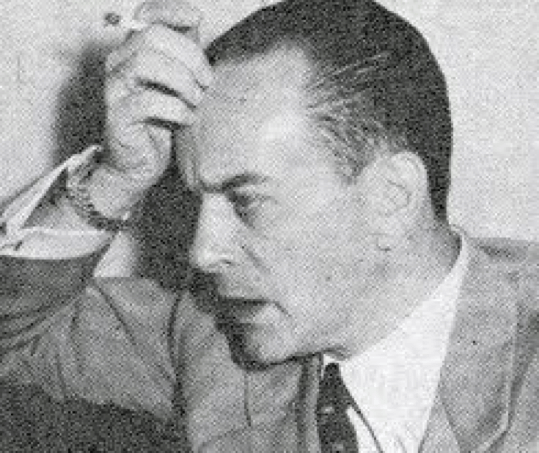
Rios Montt at his genocide trial, in military regalia and depicted in a mural calling for 'justice for he who ordered the agony'

(Top right) Rios Montt as his genocide trial (Source: http://www.dailykos.com); (Top left) The general in his younger days (www.kcsb.org); Mural with slogan ‘For he who gave the order for agony, i ask for justice’ (Source: http://www.nobelwomensinitiative.org)

When I first visited Guatemala in 2003, his party FRG (Guatemala Republican Front) was still fighting hard in the elections. The General remained a high-profile figure in politics until 2012, his office rendering him immune from prosecution. He was eventually convicted in 2013 of genocide and crimes against humanity in connection with massacres of Mayan Ixil people but that ruling was overturned on a technicality this year and a retrial is set for 2015.

Montt and the CIA left an enduring legacy. After the civil war, thousands of men who had fought on one side or the other found themselves jobless and with little in their skillset other than the ability to terrorise and kill.

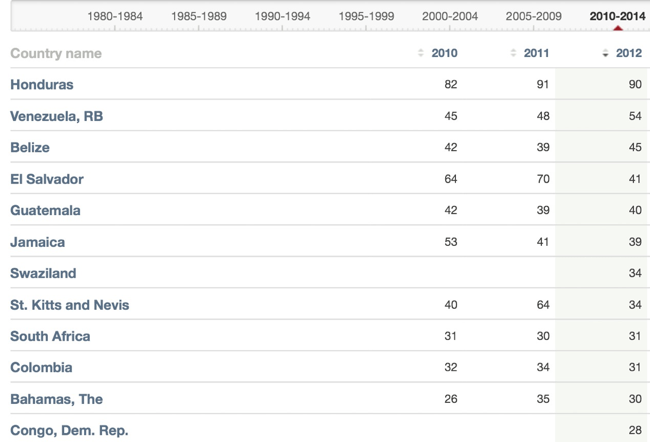
Little wonder that Guatemala suffered from one of the world’s highest kidnap and murder rates for many years afterwards. While the security situation has improved, violent crime persists. Guatemala places fifth in the list of countries with the highest murder rates, a table topped by neighbouring Honduras and dominated by Central America [Source: UNODC]

As for the Mayans who suffered so terribly in the civil war, they remain to a large extent second-class citizens in their own country, abandoned and impoverished. The toxic residue of nearly four decades will take just as long, if not longer, to dissipate.

This is just a brief and by no means exhaustive outline of Guatemala’s catastrophic lost 36 years. The full story is far more labyrinthine, though just as heartbreaking. Two books worth dipping into are Bananas by Peter Chapman and Stephan Schlesinger’s Bitter Fruit: The Story of the American Coup in Guatemala.

What I hope this summary shows though, is how the progress of a country as beautiful, diverse and culturally rich as Guatemala has been tragically undermined by the twin menaces of malnutrition and US foreign policy.

I have every confidence in the vivacity and entrepreneurialism of this great nation to overcome its problems. I only wish it had been given more of a chance before now.

For more information about chronic malnutrition in Guatemala – and to donate – please visit Food for the Hungry, Guatemala.

Volcan Pacaya

5 cool things to do in Guatemala

1. Eat dinner in a pretty colonial courtyard

Antigua Guatemala

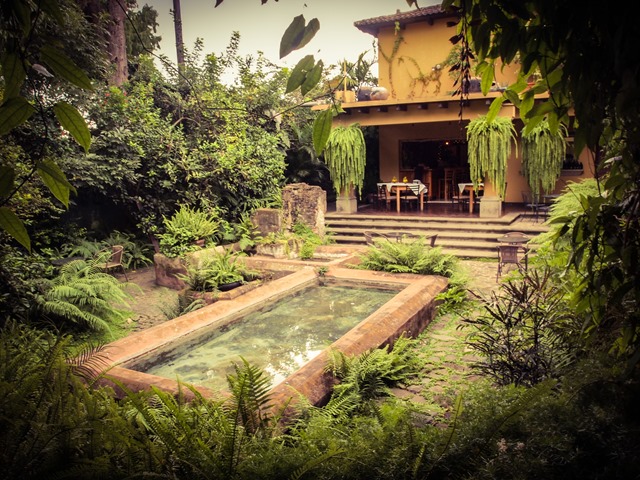
Throw a stone off a roof terrace in Antigua and chances are it’ll fall into a centuries old courtyard. The buildings in Guatemala’s former capital look more or less as they did when the Spanish ruled this country and they make for a tranquil setting at any time of day, but are especially romantic when lit by evening candlelight.

The one in the picture is at Epicure on the 3rd Avenida Norte and features the original stone washing baths, now used mainly by local birdlife. We also liked Cafe Condesa in the Parque Central for their hearty breakfasts and sinister legend of the murdered lover of the countess who gives the eatery its name.*

For your evening meal, try one of branches of La Fonda de la Calle Real. The food is typical Guatemalan with Antiguan specialties and the courtyards are some of the most charming in the city.

* He was allegedly buried alive inside the pantry walls by the cuckolded count sometime around the 17th century. When renovations were made hundreds of years later they discovered a skeleton, apparently buried standing up which lent credence to the tale.

2. Stand atop a Mayan ruin

Tikal Mayan ruins

No, this is not an impromptu yoga sesh. Franki is actually airing out her lower back sweat after the climb. The jungle is nothing if not humid and the Mayans liked their steps.

Tikal National Park, one of the world’s most important archaeological sites, is an obvious must-do in Guatemala and we’re unlikely to come up with anything original to say about it. But walking around this ancient city, inhabited from the 6th century BC until the 10th century AD, is one of those experiences that makes you stop and wonder at the ingenuity of pre-Columbian cultures.

At its peak, up to 200,000 people lived in Tikal, the centre of which covered six square miles. Meanwhile the 60,000 people that made up London’s population at the same point in history were admiring their brand new city wall – built by the Romans to protect the area we still refer to as The Square Mile.

Aside from the ruins, you can also hang out with monkeys (both howler and spider), tapirs, toucans, tarantulas, and even (Rob, look away now!) snakes.

3. Slide down a waterfall

Semuc Champey

If you’re the kind of person who sees a leaf floating down a stream and thinks “wow, wouldn’t it be cool to be a pixie, riding on that leaf” (just me?) then you’re going to love Semuc Champey.

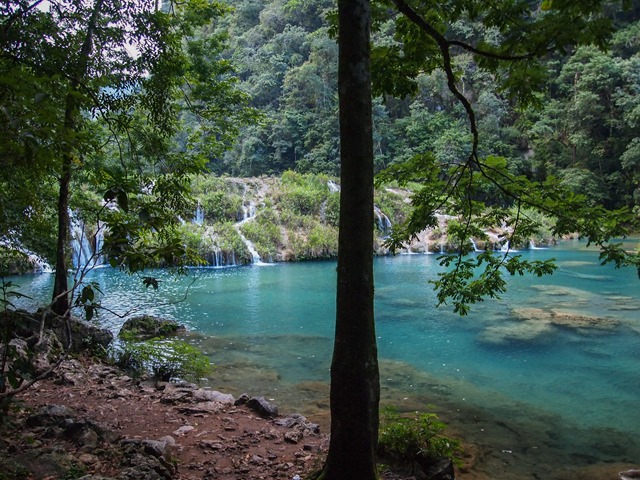
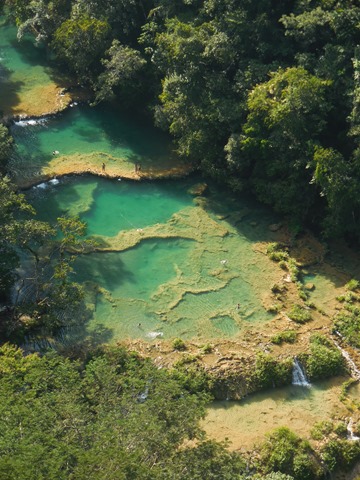
The national park is a series of terraced limestone freshwater pools connected by mini waterfalls, some of which cascade over rocks so smooth that you can slide down them as if in a water park. Climb up first to the Mirador to view the pools in all their picture-postcard glory before scrambling down for a much-needed cooling off in the clear waters.

Semuc Champey

Most hostels in Lanquin offer a full day trip to Semuc and the surrounding area for around Q170 (under £15) . This includes tubing down the river (while local children hawk cans of beer from the banks) and a swimming tour of the Lanquin caves. This candlelit adventure takes you under stalactites and over stalagmites, through subterranean waterfalls and through dark cave pools. It’s not for the faint of heart but I think we can say hands down this, combined with Semuc Champey, was the best travel experience we’ve had to date. A truly magical day.

Tip: Wear waterproof shoes or sandals to protect your feet from the rocks.

4. Wake up to a breathtaking lake view

Lago Atitlan

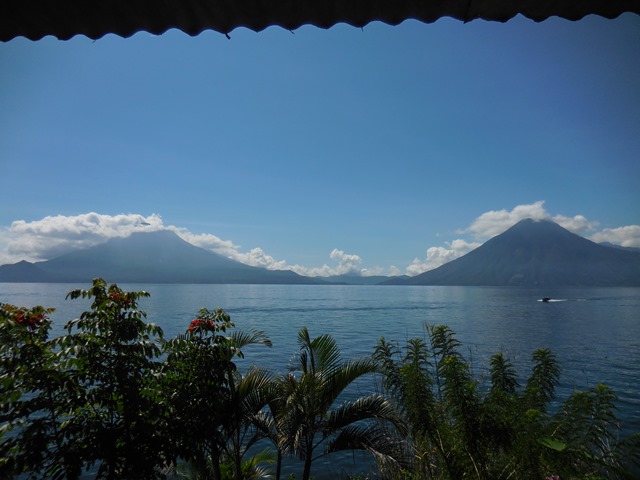
Rob has already mentioned the captivating serenity of Lago Atitlán, a volcanic lake about two hours from Antigua. Anywhere you set up camp in the area is likely to afford you a spectacular view but here’s a quick run down of the main places to stay on its shores:

San Pedro – Backpacker central. If you want to party with fellow travellers, this is the place to come. There are hostels, cafes, and bars aplenty tucked down a winding alleyway by the lake. You can take Spanish classes or just laze about in hammocks. It’s also the only place in Guatemala where you can easily buy marijuana if that’s your thing.

San Marcos – Hippies and yoga. This chilled out lancha stop is the destination of choice for anyone seeking to reconnect with the world in a more inspiring setting. It’s busier than it used to be but you’ll still find peace and tranquility.

Santa Cruz (pictured) – Downtime. There are just two hostels here and only one of them has a bar. Perfect if you’re looking to chill out. It’s also one of the best places on the lake for swimming. We stayed at the lovely Arca de Noe (the one without the bar!)

Panajachel – Where the bus drops you off. Bigger and more commercial than the others but has plenty of choice when it comes to hostels and bars and all the lanchas connect from here so you’ll have good access to the entire lake.

5. Toast marshmallows on a volcano

Volcan Pacaya marshmallows

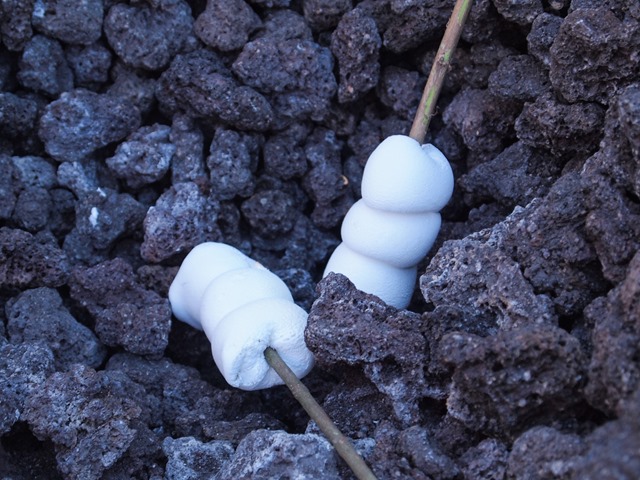
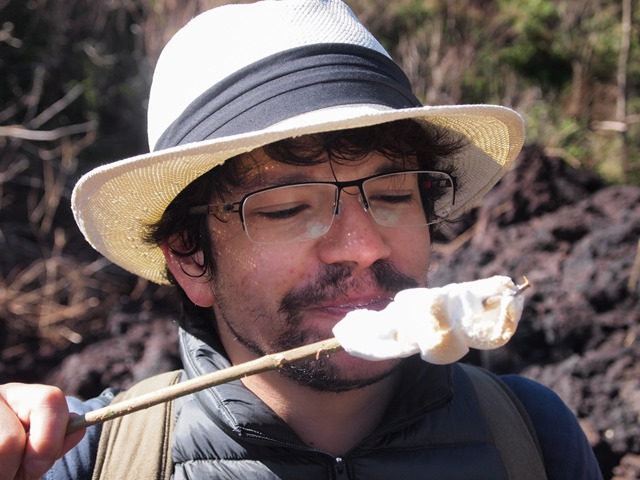
How many places in the world can you cook marshmallows on the lava rock of a recent volcanic explosion? Not many, I’ll bet. But Volcan Pacaya, an hour’s drive from Antigua, last erupted in March 2014 meaning its lava field is still barbecue-hot in places. We kept it simple with marshmallows but our guide got straight down to business with sausages on skewers.

The climb up to the top is short but steep and the loose pumice makes it treacherously unstable in places. On the lower slopes, flowers bloom and the verdant forest is home to abundant wildlife. Near the top, green fades to black as the foliage gives way to volcanic rock.

“How much warning do you get before an eruption?” Franki asked.

“About an hour,” answered our guide. Plenty of time for those marshmallows, then.

Marshmallows on Volcan Pacaya

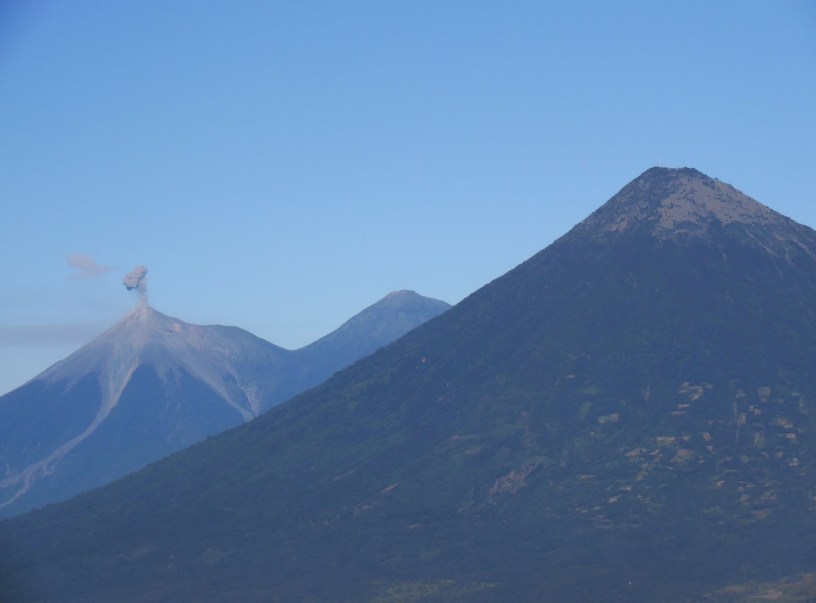
Volcan Fuego, Volcan Acatenango, Volcan Agua

Hello Guate, my old friend: How Guatemala has changed in 10 years

Returning to a country you haven’t visited for 10 years is a bit like catching up with an old schoolfriend. How will you both have changed? Will you be able to recapture the good times of old? Is it still funny to shout out euphemisms for genitalia in class while the teacher’s back is turned?

OK, perhaps not that last one. But flying in to Guatemala, where I spent five weeks in both 2003 and 2004, elicited that same sense of nostalgia tinged with cautious anticipation.

As it transpired, I needn’t have worried. Everything that makes it so easy to fall in love with Guatemala is just as it was. The people are still hospitable and humorous, the food still simple but fresh and nourishing, the towns and villages still a panoply of colour.

The soundtrack to all of this, as ever it was, is provided by the cries of street-hawkers and the roar of the country’s famous ‘chicken buses’, old US school transport converted to carry the maximum number of passengers and tricked out by drivers competing to display the maximum amount of bling.

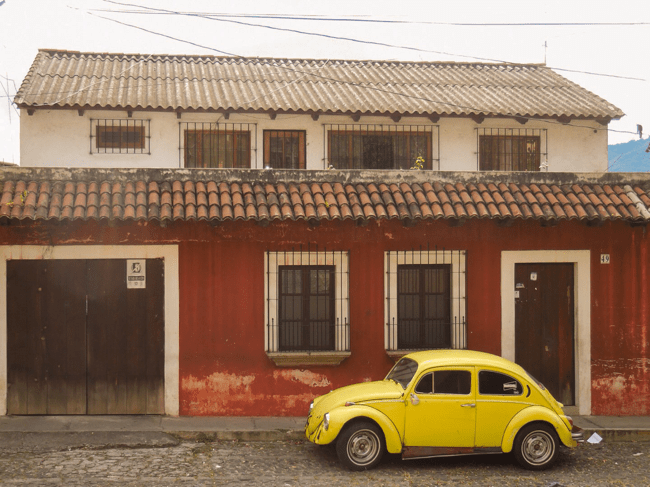
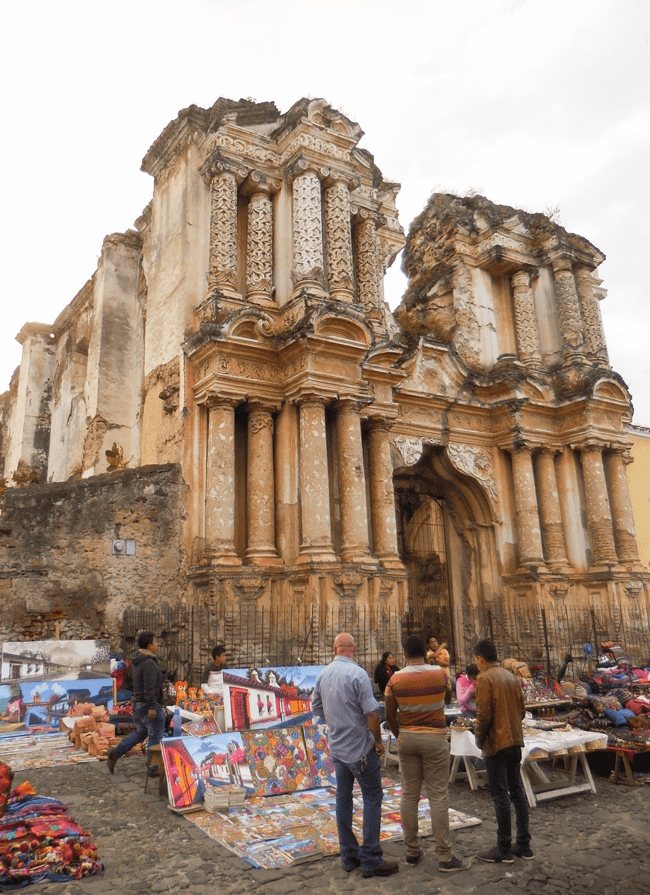
Most travellers set up home initially in La Antigua, the country’s capital until the mammoth Santa Marta earthquakes of 1773 triggered a move to modern-day capital Guatemala City. Antigua is ‘the place to stay’ for good reason. Its cobbled streets and brightly-painted stone houses are interspersed with ruined but well-preserved churches and monasteries, frozen in time since they were laid low by successive earthquakes.

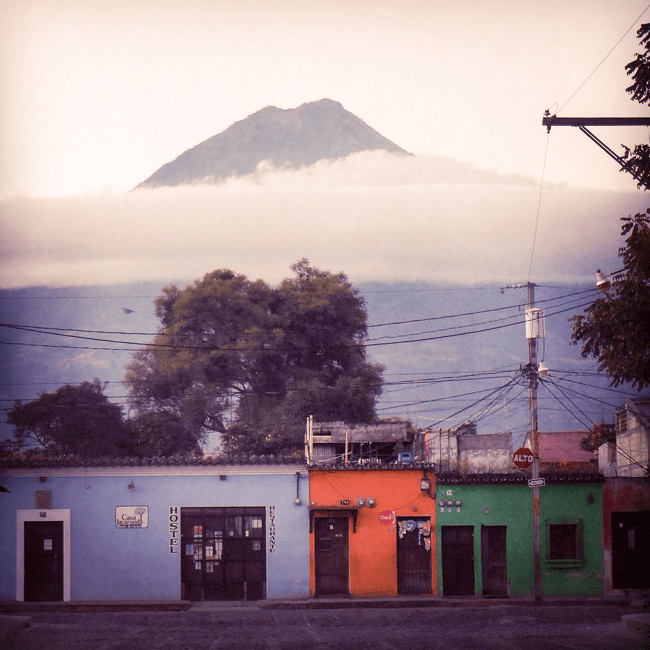
The backdrop to all of this is the eternal looming presence of Volcan Agua, watching over the city like a strict museum curator ensuring it never loses its ancient charm.

Not only is Antigua far safer and prettier than the capital, but it is almost as well connected for most travel destinations in the country.

On my last visit, I was learning Spanish at the excellent Probigua language school. Antigua boasts an abundance of escuelas where you can learn the lingo but Probigua (PROyecto BIbliotecas GUAtemala) is different. Many of these places are simply out to extract as many Quetzals (local currency) as possible from the gringos but Probigua is a non-profit organisation. Your fees are ploughed into literacy programmes and students join the school’s staff on weekend expeditions in the Probigua travelling literacy bus to deliver books and computers to schools in the region, most of which are sadly lacking in resources.

It was heartening to see the old place that taught me my rudimentary but passable Spanish, apparently thriving as the best place to learn the language in Antigua.

I was even more excited at the prospect of visiting Veronica, the lady with whom I stayed both times I was last here. I used to call her mi segunda mama (my second Mum) and we would joke long into the evening while enjoying her delicious and wholesome cooking, including her excellent guisquil (also known as chayote, a local squash-like vegetable).

Through the haze of a decade’s new memories, I managed to remember where she lived and, totally unannounced, Franki and I made our way up to her house. Cue a very happy reunion as she invited us in to see the upgrades she has made to the family home.

She has acquired five grandchildren since I last stayed with her and most of her extended family now lives in the rooms she once let out to language students like me. I remember well how she and her sons had squeezed into two small rooms to accommodate guests, in order to make enough money to improve their circumstances.

Well here were the fruits of her labours, 10 years on. She had worked hard, opened up her home to people like me, and her growing family was now reaping the benefits exactly as planned. Nothing could make me happier to see her nous and hard graft paying off. Not only that but she was kind enough to pretend that I looked very different with my nascent and still rather pitiful travellers’ beard.

So what else has changed except for Veronica’s grandkids and my ‘beard’? The active Pacaya volcano has changed a fair bit, largely because it has erupted more than once in a pretty major way (check out the video) since I first climbed it. According to our guide, the path I took in 2003 was buried by molten lava earlier this year. In geological terms, that’s a near miss.

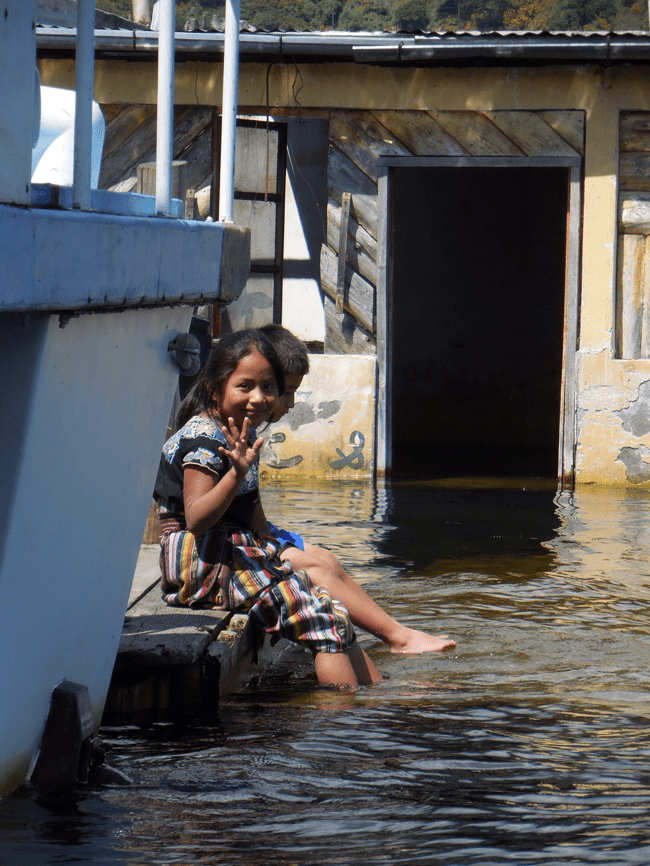
Lago Atitlan, the idyllic lake surrounded by volcanoes, has also witnessed some developments. For starters, the lake has risen by about 10 metres in the past decade, meaning much of the dockside infrastructure is now underwater.

On the plus side, the quiet hotels at Santa Cruz de la Laguna (try the uber-tranquil Arca de Noe if you get a chance) now come with added electricity. In 2004 it was candlelight only, which led to me plummeting six feet into an open sewer (thankfully dry) and landing on my knee. I can still tell when it’s going to rain by the twinge under my patella, thanks to that little mishap.

As a coffee lover (addict?), I immediately noticed a big difference in that Guatemala’s largest export is actually available within the country these days. When I first visited, all the good stuff was exported as soon as possible, hardly any of it seeing the inside of a Guatemalan cafe or restaurant. The coffee fincas were dotted around the country but you couldn’t get a decent brew for love nor money.

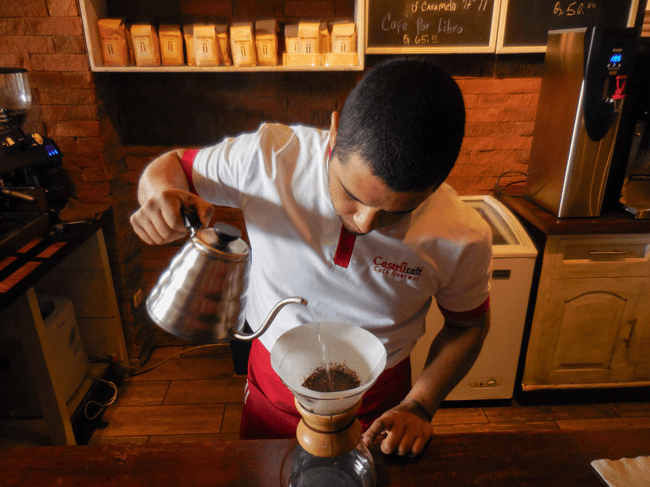
Now, there are a good half-dozen venues in Antigua dedicated to the art (and it is an art) of serving up the best coffee money can buy. The friendly knowledgeable guys at family enterprise Castellcafe (San Lucas branch pictured here) do a mean espresso and are particularly fond of the Chemex method of brewing coffee. You can find the Antigua branch in the Parque Central.

Don’t expect to find a skinny cinnamon macchiato when you’re in the depths of the jungle or up in the Alta Verapaz though. After all, you wouldn’t expect to find howler monkeys or Mayan ruins in a Shoreditch pop-up coffee house. Sadly.

Without a doubt, Antigua’s nightlife is also livelier than it once was. There are fewer tourists now than in 2004, by some estimates about half as many. But there are more bars than before and they are no longer dominated by tourists.

Whether it’s due to the emergence and growth of the middle class in Guatemala I couldn’t say, but there seemed to be more Chapins (Guatemalans) raving the night away and more places for them to do it.

Coming back to the scene of so many great memories, I was always going to notice what was different about the place. But while much has changed since I was here, there is plenty that hasn’t. For all of its stunning natural beauty and rich cultural heritage, Guatemala still struggles with chronic malnutrition and violence.

Anyway, more on that in the next blog about Guatemala, plus plenty more to come on what to do and see in this stunning country.

Big Sur

Driving the Pacific Highway

Day 1 – San Francisco to Monterey

Leave San Francisco with heavy clouds gathering overhead. It won’t be long before they break, chucking their contents down on us.

Our hire car is a Mazda 2. It’s not the sort of car you fantasise about in any context, let alone for one of the world’s top “drives to do before you die” or similar hyperbolic nonsense. It’s actually pretty good although there’s no sat nav. Which will be interesting.

The rain starts before we even reach the sea. At San Gregorio beach people have built driftwood bonfires in anticipation of the weekend’s Halloween festivities. “Poor fuckers,” sympathises Rob. The wood is drenched now and useless.
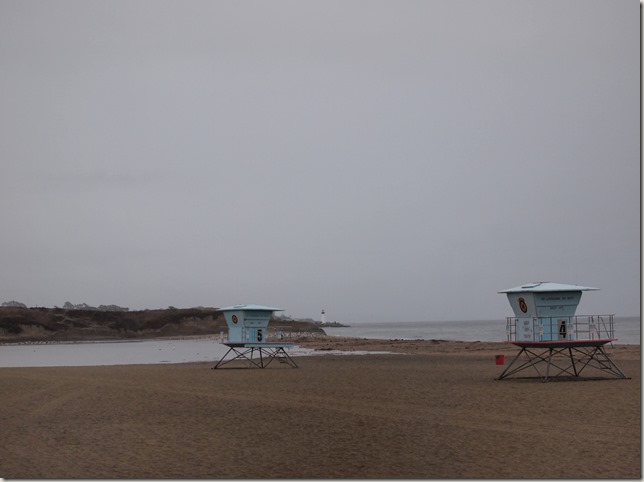
Santa Cruz beach

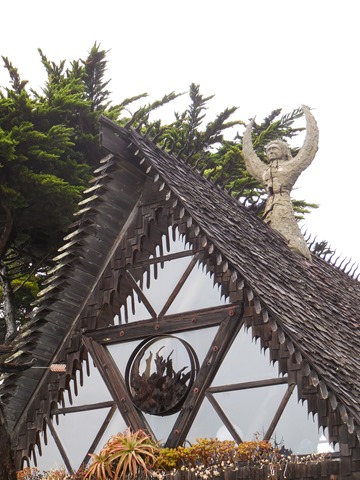
Stop at Half Moon Bay where we stand on rocks shiny with water and try to have fun. Take pictures of an interesting house with wood tiling and elaborate gables. A stone angel is built into the roof. “Are you sure that’s an angel? Looks a bit… pagan.”

There’s a sign out front: California Sun Centre for Wellbeing. We beat a swift retreat.
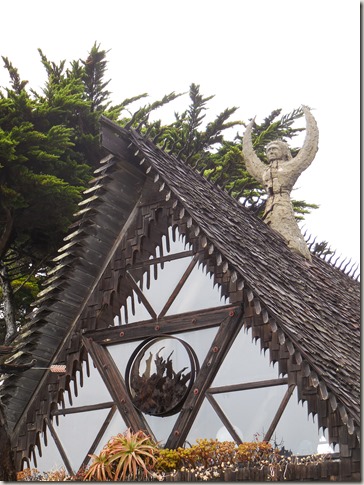
California sun centre for wellbeing

At Santa Cruz we park in a near-flooded lot and dash to the nearest cafe. Clothes beyond sodden. On the plus side, the sandwiches at The Picnic Basket are excellent.

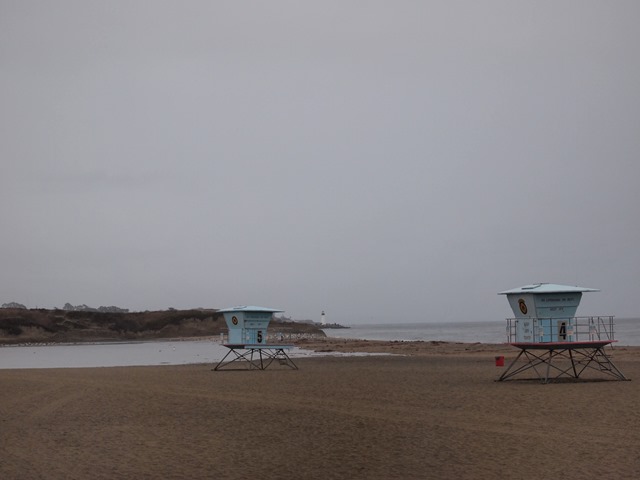
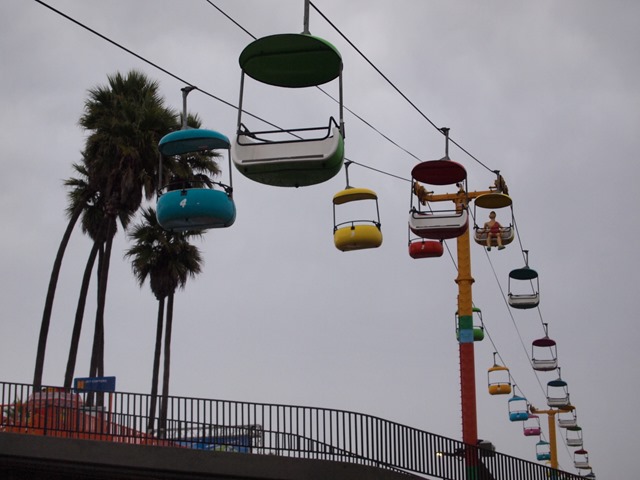
Wander round the damp, deserted boardwalk taking photos of brash signs for cotton candy and tater tots, the latter of which is an entirely new concept to Franki. Brightly coloured fairground rides are backed by endless, billowing grey.
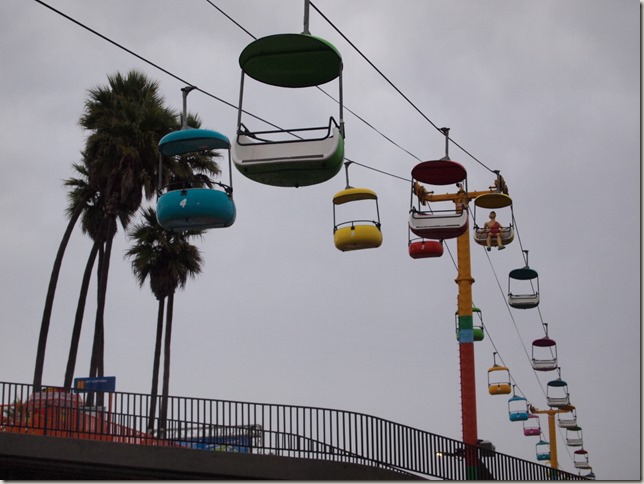
Santa Cruz boardwalk

“It reminds me of a zombie movie,” volunteers Rob. “You know, after they’ve cleared the place out.”

Directly to our left a door slams. Two sets of skins are nearly vacated. It’s just a janitor.

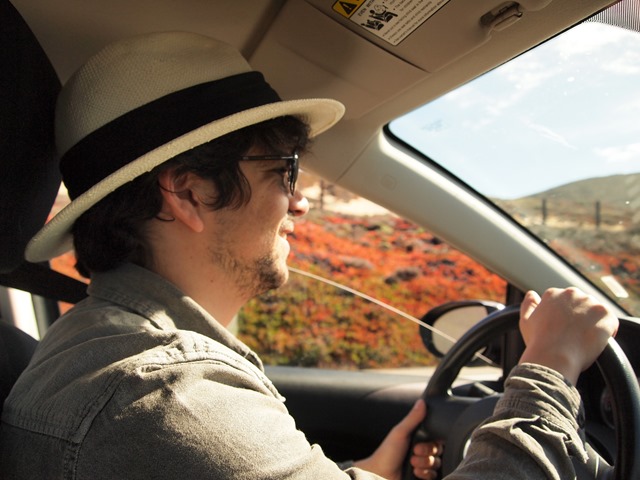
Carrying on towards Monterey it’s Franki’s turn to drive. Six months as a licensed driver but why not? One has to take the bull by the horns.

The rain really gets into its stride now, hammering down on the windscreen, roads slick and treacherous. The grey and green of California’s most famous highway flashes passed, lit occasionally by the oncoming lights of a passing car. Gripping the steering wheel she recites stopping speeds in her head.
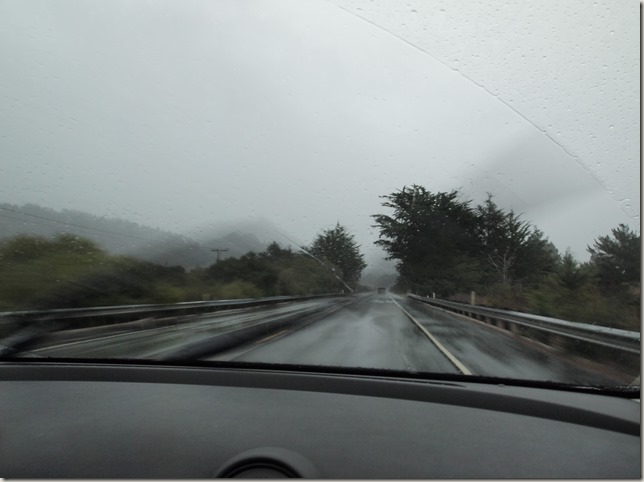
Highway 1 California

Arrive in Monterey around 5. Too cold, soggy, and miserable to do much. The town is in a state of costumed revelry. We go for dinner on Cannery Row. The food is plentiful but unremarkable. Somewhere some very poor live music is being inflicted on people. The bars have too much neon in their windows. Suspect this is not the future Steinbeck envisioned.

Cannery Row is like Disneyland for sardine fishing. It is still cold and drizzling.

At a bar in town we are served by Cruella de Vil. A non-specific superhero and an American football player with a bloody bandage round his head elbow their way past us and order two shots of Jagermeister and two Stellas. We go back to the hotel.

Day 2 – Monterey to Morro Bay

It’s still raining. We head out of town towards 17-Mile Drive.

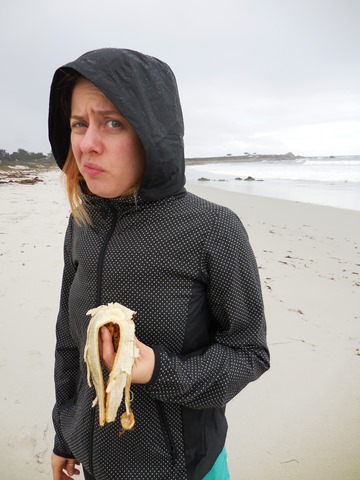
Breakfast at the Monterey Hotel was minimal. Eat bananas on the beach instead. To make a California road trip look like a wet weekend at the British seaside is no mean feat.
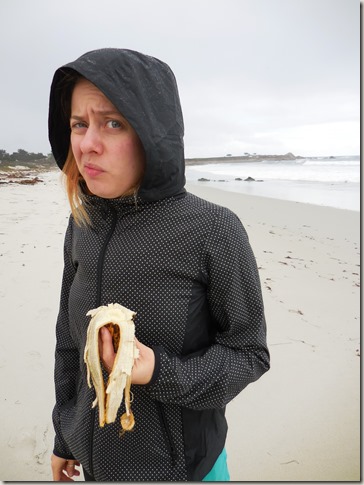
17 mile drive

On the saturated sand we snap pictures desolately. The ocean beneath the battleship sky ranges from palest turquoise to dark, brooding, petrol. The sea birds hold out their wings to dry. In vain, it seems.

Around mid-morning blue sky emerges; bright, hopeful patches between the still-dripping branches of the cypress trees. We drive on to Carmel-by-the-sea.

Pristine and perfectly formed, the town calls to mind a high-end ski resort. Everything is elegant and tasteful, everything you need is here. For a price. Also, there are evergreens.

We buy sandwiches in Bruno’s deli which will later be consumed high on the cliffs of Big Sur, overlooking the now glistening ocean.
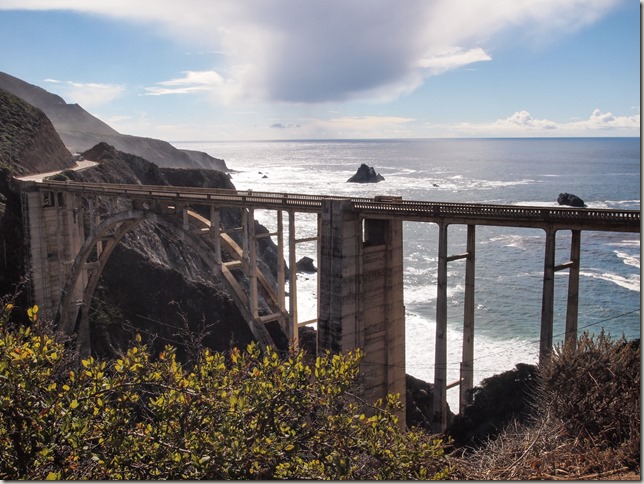
Bixby bridge

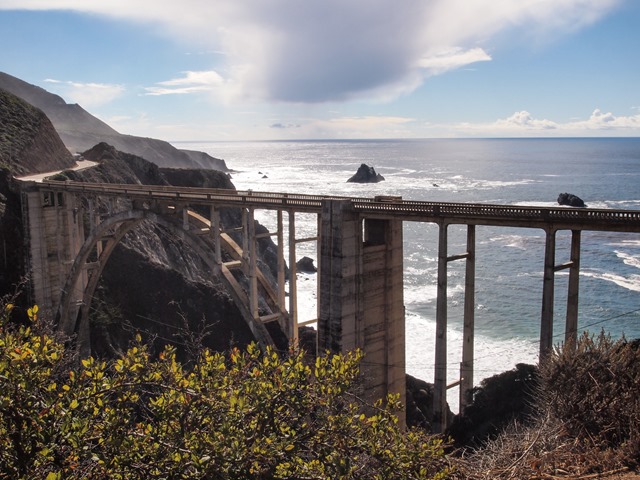
By the time we reach the “historic” Bixby Bridge (built in 1932) the sun is out and the wild lavender that clings to the cliffs either side is fragrant and blooming. Sunglasses are on. Janis Joplin makes her way from Rob’s iPod to the car stereo.
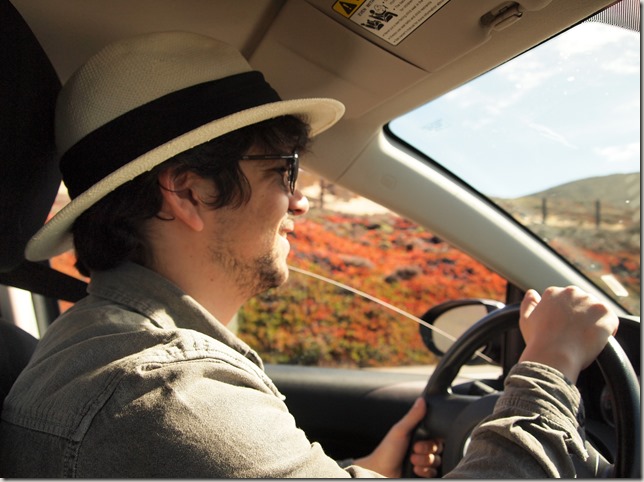
Driving the Pacific Highway

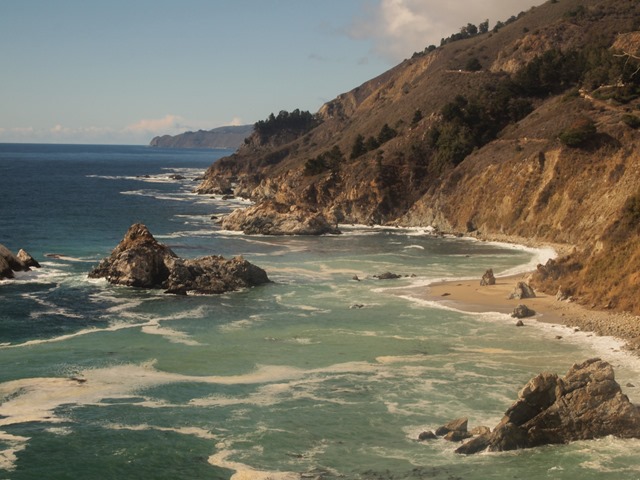
Big Sur is everything they told us. Sweeping curves, precipitous drops, towering redwoods and shimmering cobalt water become our backdrop. Rob’s eyes are on the road but out of the corners he sees green and blue, green and blue. Sunlight flickers through the trees.

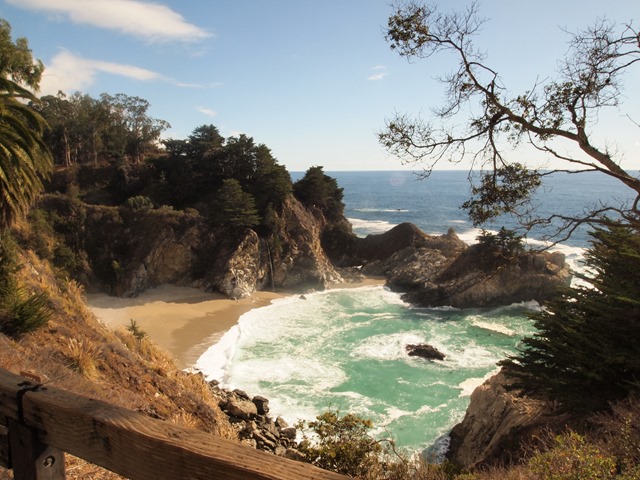
At Pfeiffer State Park we walk the path to the waterfall. Once it cut through the rock and dropped straight into the ocean but landslides caused sand to build up. Now it drops onto the beach. Like a natural shower. Like a fairytale grotto on a beach that cannot be accessed.
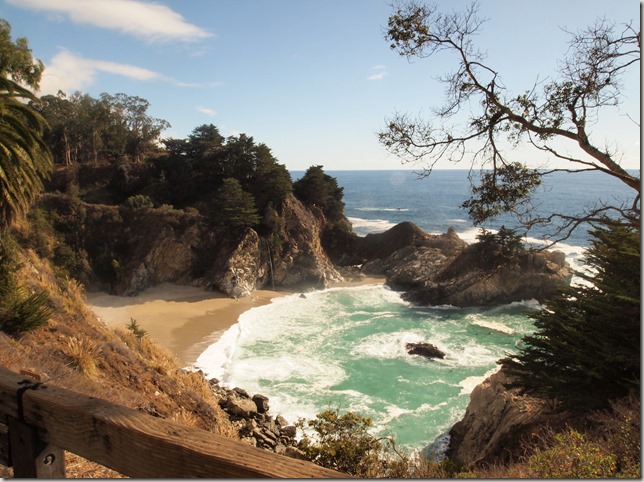
Pfeiffer State Park waterfall

The elephant seals are just north of Morro Bay. We aren’t expecting them but suddenly there they are, dozens upon dozens, covering the beaches. The name does not mislead: they are huge. Against the sunset a pair play. Or fight.

Morro Bay is delightful. The Sandpiper Inn has bright green paintwork. This is not a criticism. We eat “naked” fish at the The Galley. It’s fantastic. It tastes of fish, a novelty, we’ve found. This country likes its salsas, its marinades, its spice rubs.

Fish eaten, wine drunk. We walk back to the motel, tired and happy.

Day 3 – Morro Bay to Santa Barbara

Time to explore the wine lands. But first: coffee.

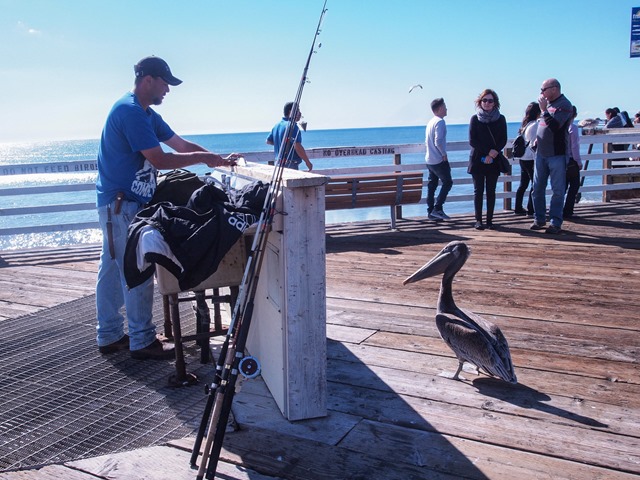
Stop at Pismo Beach. Out on the wooden pier we watch the surfers. Fishing rods lean against the wooden rail, their owners reclined in chairs. On the deck a pelican looks on hopefully as a man cleans and de-scales his catch. He is rewarded shortly. The man cuts off the fish head and flicks it in the air. The great sagging beak opens and closes on its prize.
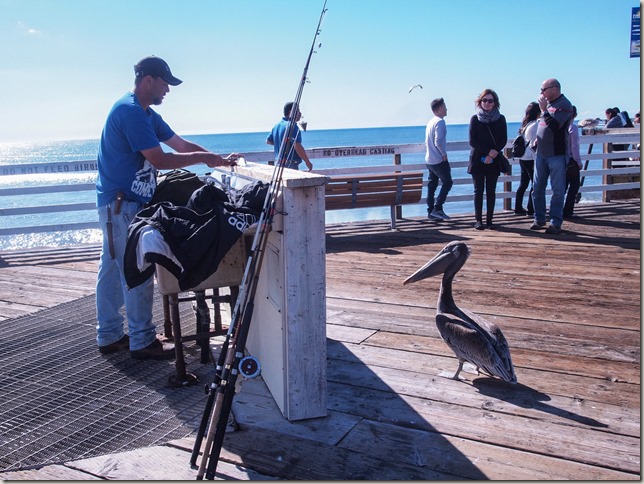
Pismo Beach pier

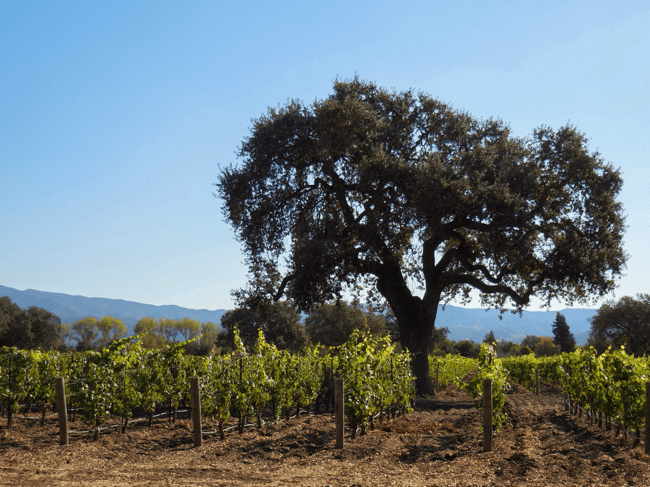
Inland the picture looks like this, from front to back: road, vineyards, mountains. At Roblar Vineyard in Santa Ynez we eat sourdough pizza and work our way through six different wines. Not Rob, though. He’s driving.

Michael Jackson lived nearby. “Shall we go to Neverland?” Bit creepy. But why not?

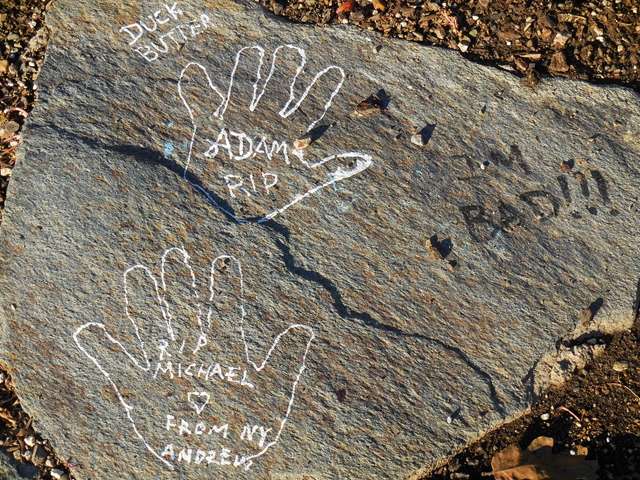
The walls outside the front gates – you can’t see the house, it is literally miles away – are covered in the loving graffiti of heart-broken fans. “I miss you, Michael,” “I’ll never forget you,” “Your music was my life.” And this one, succinct but poignant: “I’m bad!” The security guard tells us, “Take as long as you need.” We get back in the car.
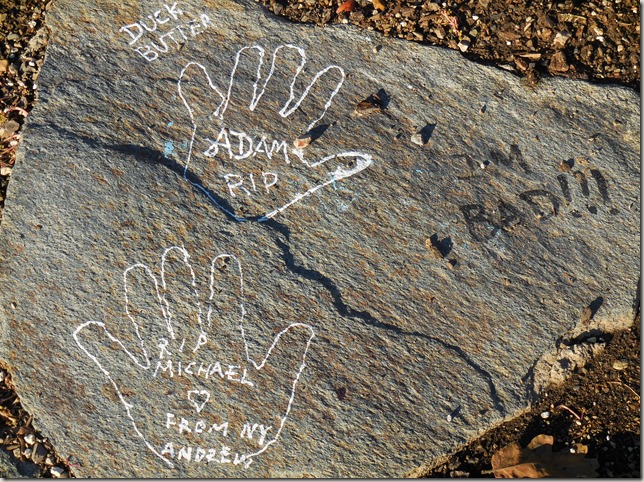
Neverland

Solvang is an odd place. A Danish village in Southern California. Quaint chalets – or modern American notions of chalets – house supermarkets and pharmacies. We pass patisseries and delicatessens. There’s a ‘Hamlet Inn’.

Sundown comes at El Capitan State Beach. We clatter along the cobbles trying to capture the light, the colours, on our cameras. Give up and use our eyes instead. Fire blends into water. Sunset over the Pacific. We are as far west as we have ever been.
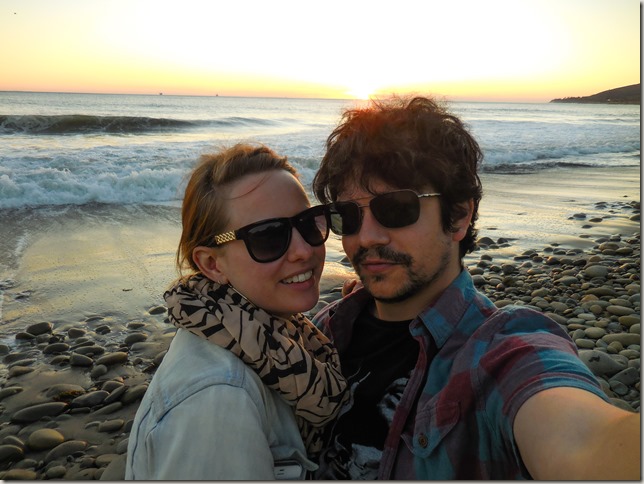
El Capitan State Beach

Drive into Santa Barbara in the dark. The white streets are almost unreal. It is a concept, surely, this place. An idea someone once had of the perfect beach town. Then they built it all in one go.

We have seafood again. It’s average. We drink overpriced wine in an awful bar with a fire pit. We return to the Agave Inn which has crisp white sheets and colourful Latin American-style blankets.

Day 4 – Santa Barbara to LA

Breakfast is easily the best thing we do today and it’s over by 10.30.

Franki wanted a ‘proper American breakfast’. Jeannines does just that. We won’t need to eat til dinner time.

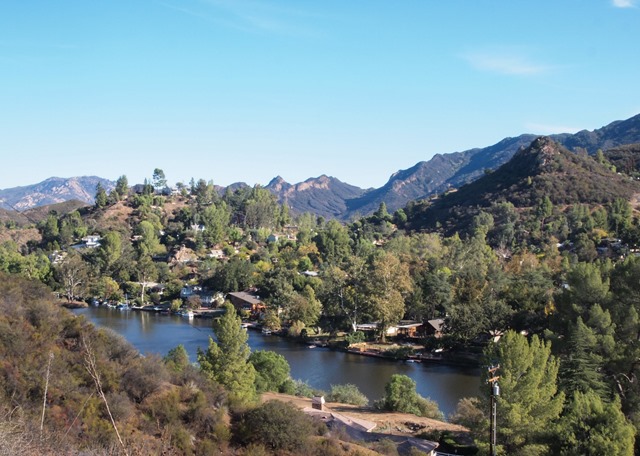
The highway runs through Malibu. The highway more or less IS Malibu. Houses stack up the hill on one side, beaches on the other. Drive into a canyon and up to a lake. Very beautiful and exclusive with absolutely nothing to do.
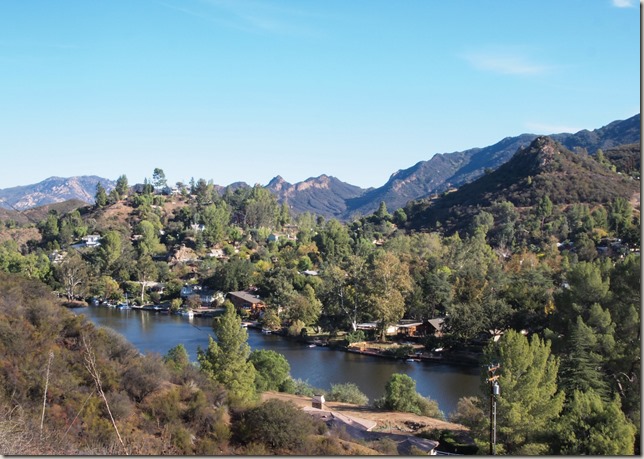
Malibu canyon

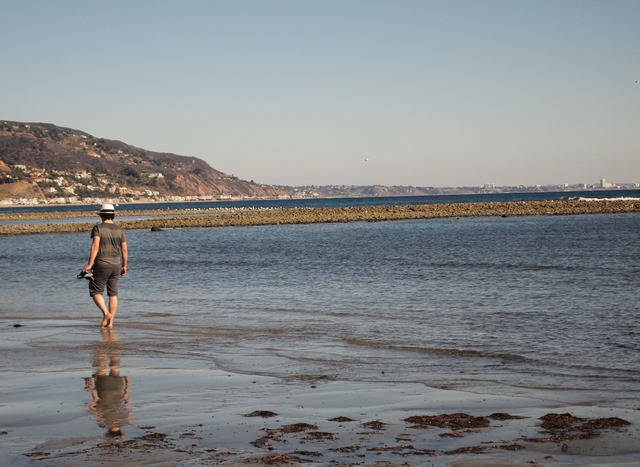
Rob likes the sound of a ‘lagoon’ so we go to Malibu Lagoon State Beach. Not the kind of lagoon he imagined. It’s a service station for migrating birds. In no way a bad thing. Pelicans, gulls, kingfishers, coots, sandpipers, cormorants, egrets (snowy and otherwise), those ones that drill their whole beaks into the sand.
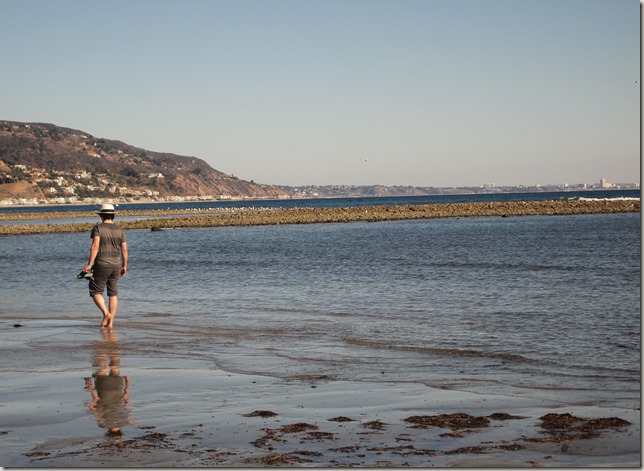
Malibu Lagoon State Beach

Camarillo is charmless. Go if you like outlet stores and freeways. There is a ‘delighful Old Town’ but it’s next to a freeway and not very old. Maybe it’s old if you’re not from Europe. Maybe it’s delightful if it’s open. It’s not open.

Planned to go to the Getty Villa but we can’t find it. Says it’s in Malibu. We’re almost back in Santa Monica before we spot it. It’s now 5pm. The call of cold beer and a relaxed dinner in Venice is too strong. We drive past. Next time…
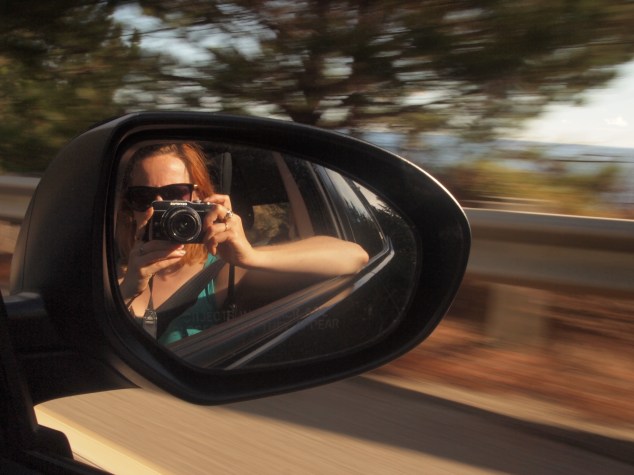
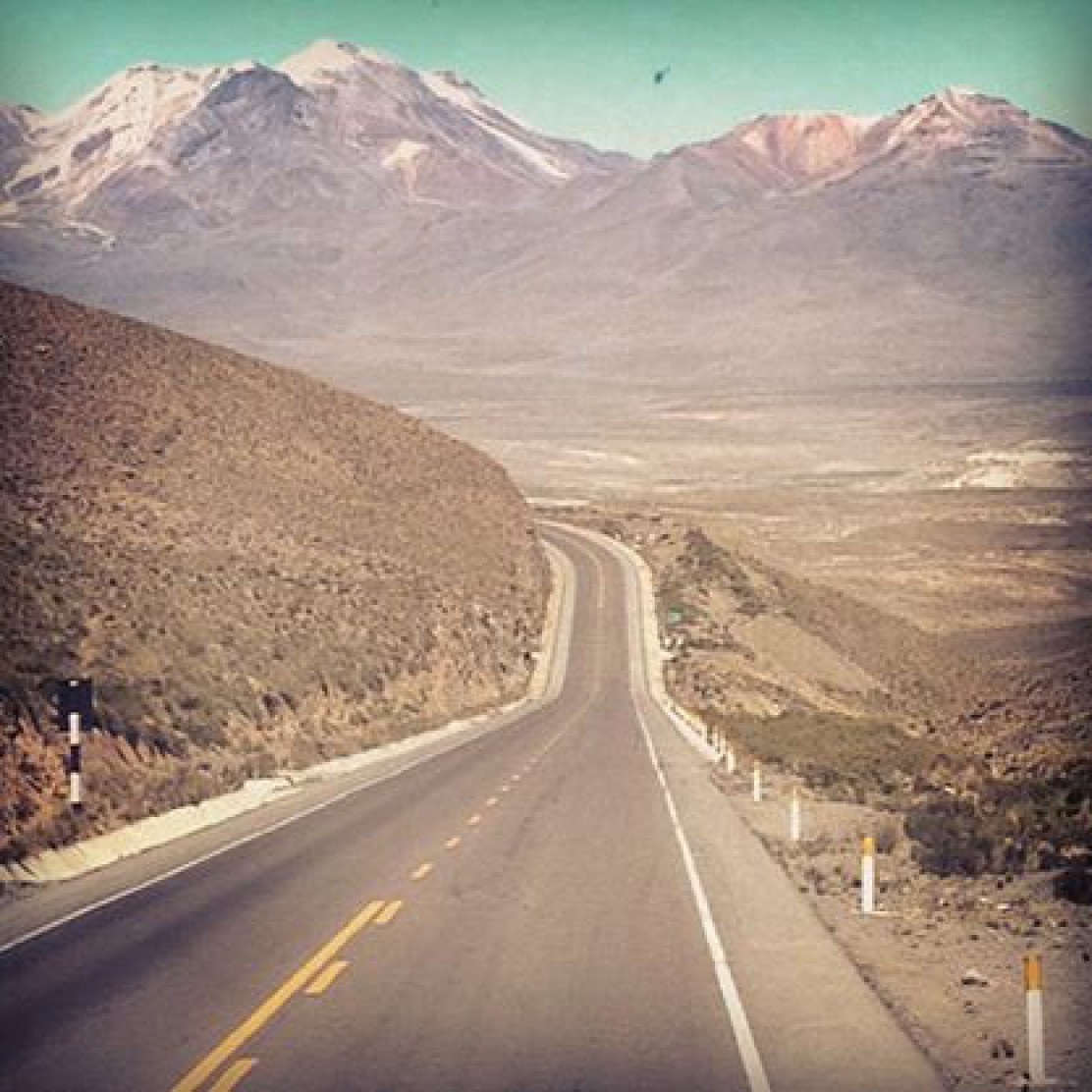
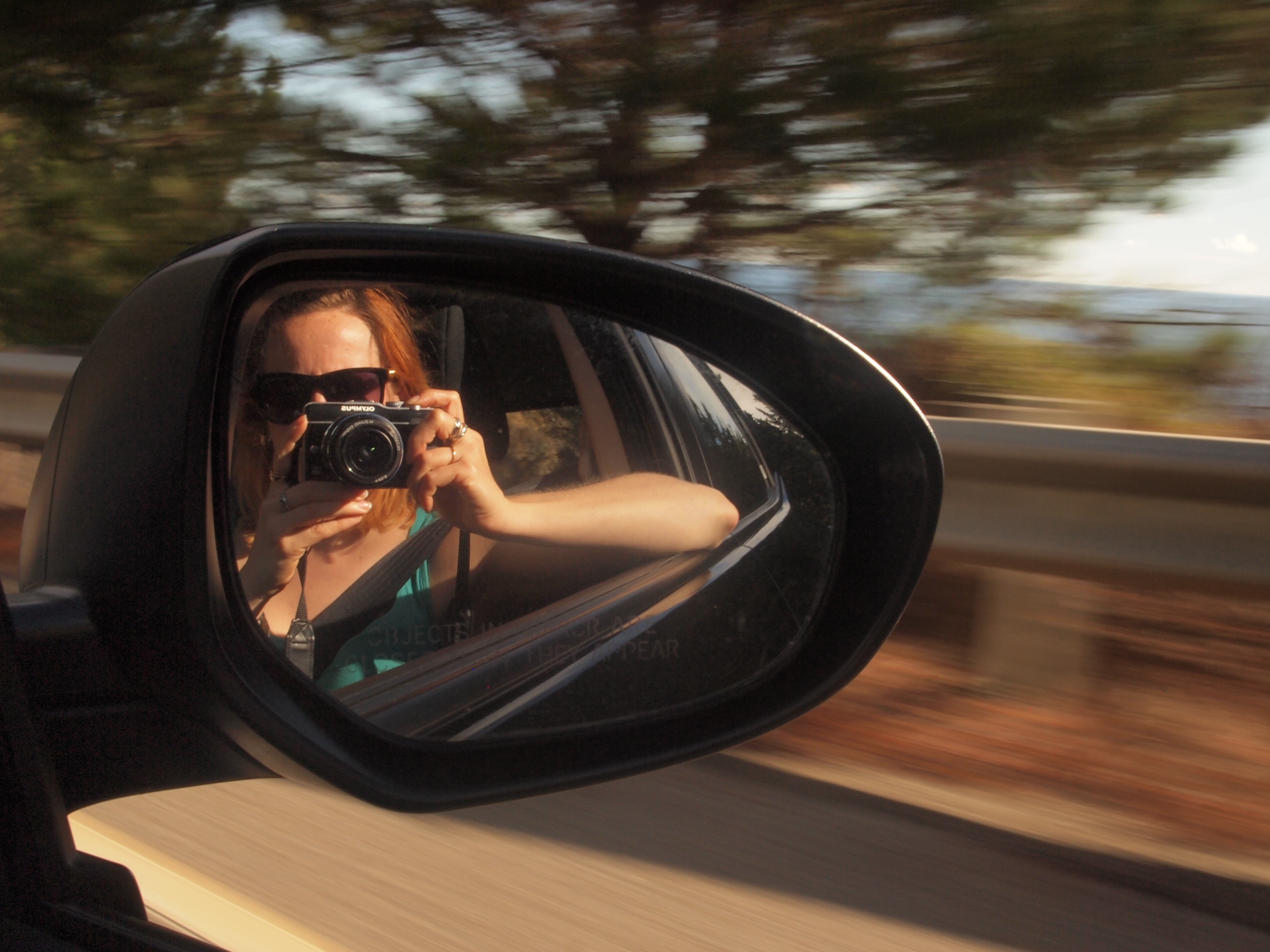
Pacific Highway

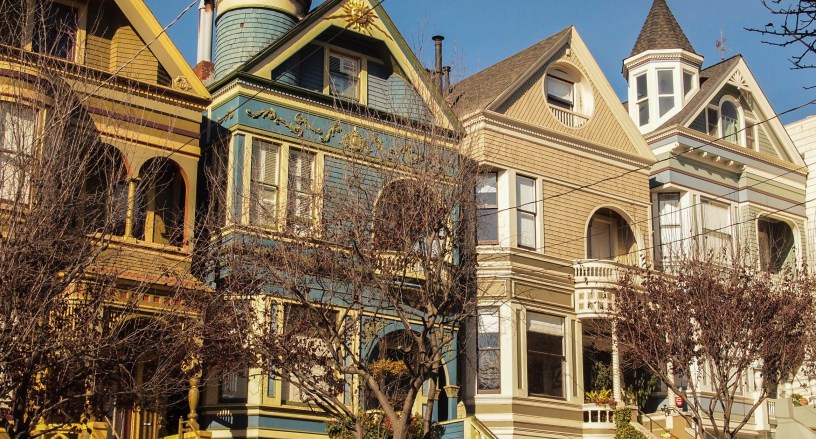
San Francisco houses

San Francisco: The Debrief

What we did and what we reckon you should do too…

Eat: Oysters.

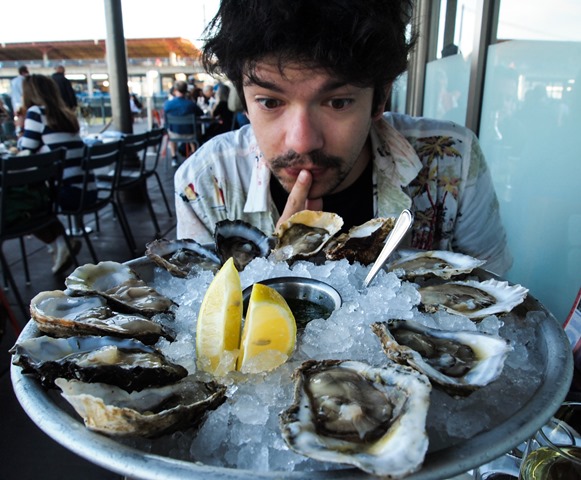
Regularly named as one of the world’s top oyster towns, you can’t come to San Francisco without sampling this iconic dish. If you’re anything like me, you tried an oyster aged about 13, decided it tasted of sea water and snot and have refused to touch the things ever since. Trust me: it’s time to have another go.

There are dozens of bars and restaurants vying for the coveted top spot and if you’re interested in trying out more than one, there are some good round-ups HERE and HERE. I’d have loved to do the research for you but I was already on a mission to review every coffee shop in SF so the oysters had to take a back seat. We went to the Hog Island Oyster Co. housed in the old ferry terminal on the Embarcadero where a dozen mixed oysters for $36 (£23) slipped down a treat.

Hog Island Oyster Co

Drink: Coffee.

Were you really expecting us to say anything else? For Franki’s full guide to San Francisco coffee houses, see HERE. A special mention also goes to breakfast cocktails, as detailed in Rob’s recent Booze of the World post. From Bucks Fizz to more potent combinations, we found that no weekend brunch was complete without a cheeky tipple.

Try: Cycling up a hill.

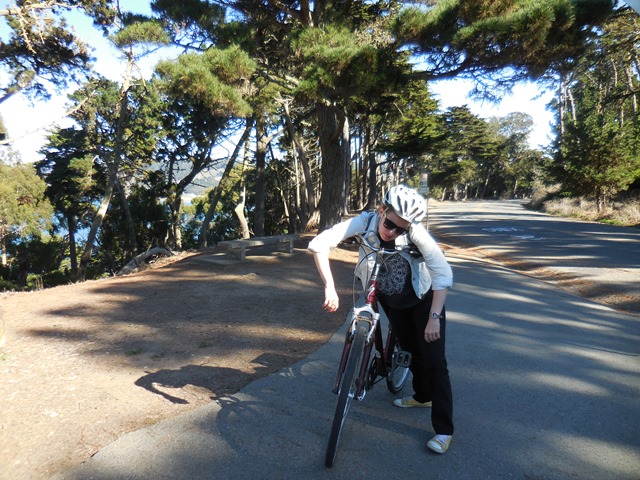
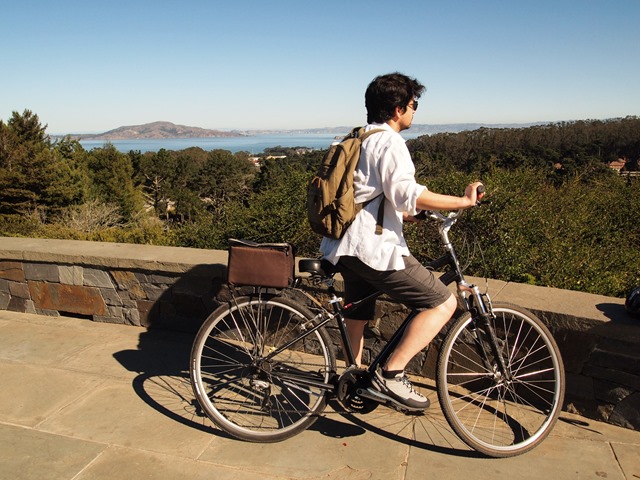
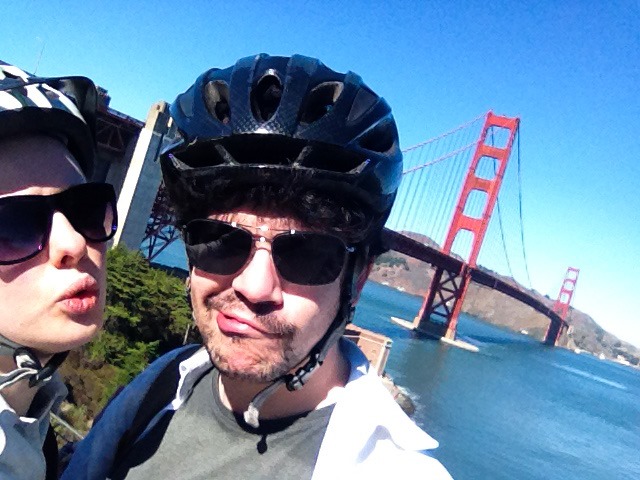
The locals make it look easy but don’t be fooled. We rented bikes for $25 (£16) each a day in order to see the city parks and to cross the Golden Gate Bridge – a thoroughly awe-inspiring experience which we sincerely recommend – but even our supposed ‘flat route’ was chest-clutchingly difficult in parts. I’ll be honest, we got off and pushed more than once.
Cycling San Francisco

It was well worth the effort, though. We picked up our bikes from San Francisco Bike Rentals in the morning and headed straight to the bridge before making our way back, via the Beach Chalet brewery and restaurant at the Pacific end of Golden Gate park where we stopped for lunch. The afternoon was then a leisurely meander back through the park to Haight-Ashbury and the bike shop.

Cycling San Francisco

Buy: Shoes. A MUNI pass.

SF is undoubtedly a good place to buy shoes but on reflection we felt the transport tip was of more use to the general travelling public. A boring one, admittedly but getting a week’s travel card on the MUNI public transport system really opened up San Francisco for us. Seven days costs $29 (£18) and covers all buses, trams (Franki’s personal favourite – see HERE for details) and cable cars. The network is excellent and you really can get to pretty much any part of town – and that’s coming from a Londoner!

And if you do happen to find yourself in a footwear emergency, Haight Street is the place to go.

Do: Familiarise yourself with the local sports team.

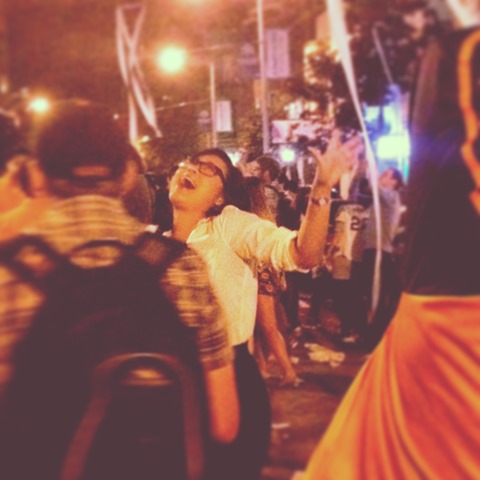
We were lucky enough to be in town to see the San Francisco Giants win the World Series. As someone who’s never had more than a passing awareness of baseball, it turned out to be a truly fantastic experience and a privilege to witness. For Rob. who’ll watch pretty much any sport as long as it isn’t American, learning the rules and getting into the strategy of it proved engrossing. Plus, asking about the rules helped endear us to people in bars.

The impromptu street party in Lower Haight:

San Francisco Giants World Series

And in the Mission District:

San Francisco Giants World Series 2014

Don’t: Say no when people offer to pay for your drinks.

I’m not saying this will definitely happen, but on two occasions – TWO – the people we were talking to insisted on buying our drinks. And you know when I say insisted I mean it because we’re British and “oh no, please, you really mustn’t, honestly no, please, don’t be silly, that’s quite unnecessary… [ad infinitum]” is something we don’t tire of easily.

Overall San Francisco was a place where we really witnessed the renowned American friendliness. We met people from New York, Boston, somewhere in Philly (in town for a Pearl Jam gig), a couple who’d just moved to SF from Cambridge, Mass, (envy!) an elderly couple who’d lived in the city all their lives, and countless groovy bartenders, waiting staff and baristas. And most of these seemed genuinely happy to help us out, give us tips, share their own stories and occasionally get the drinks in. As the first stop on a round-the-world tour it was a fantastic lesson in shaking off the characteristic reserve and getting stuck in chatting to people.

Plus it meant we had conversations with people other than each other which can only be a good thing for our sanity.

And not forgetting…

…when a man got on the bus with a live snake in his bag. It started out innocently enough. An odd-looking chap in dirty clothes, a slightly vacant air, and apparently talking to himself under his breath, sat down opposite us on the Number 5. So far, so San Francisco. But then he proceeded to fiddle with the zip of his holdall from which we suddenly realised was protruding a rather long, pale yellow, and distinctly reptilian tail. Next to me Rob, whose one major phobia is snakes, tangibly froze in horror.

Mumbling words to the effect of “better put him back in” the man then proceeded to ineptly stuff the curling lengths into the holdall while fellow passengers looked on, half in fascination, half in mounting terror. Finally he got the thing contained and zipped up but it’s safe to say we couldn’t get off that bus fast enough.

Til next time, friends!

Cycle Golden Gate Bridge

Booze of the World 1: California

In the first instalment of a regular feature I’m oh-so-cleverly calling Booze of the World, here’s a run-down of tremendous tipples and wonderful watering holes from LA to San Francisco.

Californian wine gurus may not want to admit it, but there’s not much they can do that the French haven’t done first.

As a Brit who has holidayed in France, where even a dirt-cheap vin de table can be delicious, it’s going to take something pretty special to measure up to what’s on offer just a short hop across La Manche.

When it comes to beer though, the US can claim to have blazed a trail. The old cliche in the UK is that Americans swig watery Budweiser by the gallon without stopping to taste the stuff, with flavour sacrificed to the greater aim of getting legless. Why else would you drink that swill, right?

But while bearded British ale snobs have been cocking a snook at our American cousins, for the past decade and more they’ve quietly been leading a craft beer revolution. So what’s on offer?

Los Angeles

If we’d stayed longer than three days i’m sure there would have been more bars to tell you about but the casual tourist can’t go wrong with the Venice Ale House, a beachside people-watching venue mentioned in LA: The Debrief.

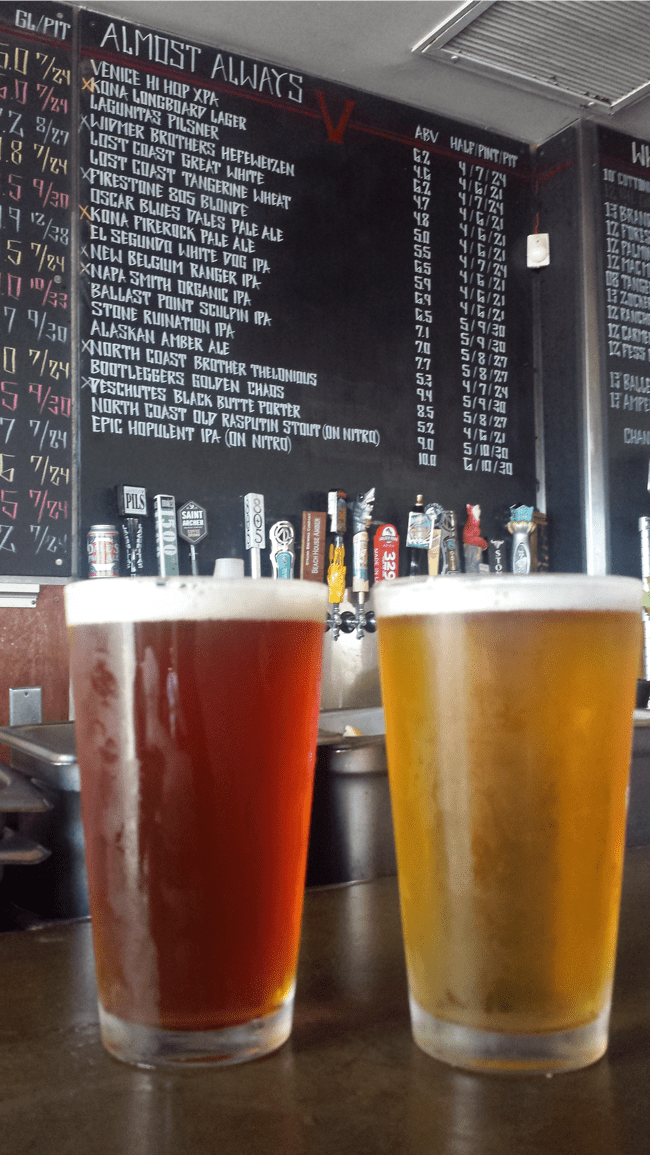
Still getting used to the novelty of hot sunshine in October, I went for a cooling slow-fermented Alaskan Amber Ale, which proved thirst-quenching and not too hoppy. I instinctively feel like hoppiness is better on rainy cold days, don’t ask me why.

India Pale Ale fan Franki opted for the Stone Ruination, which did the job without being spectacular. To be honest, we were so jet-lagged that our tastebuds weren’t firing on all cylinders just yet.

If you’re in Hollywood, it’s also worth dropping into the Snake Pit Alehouse on Melrose Avenue. It’s fairly short on variety but still stocks some delicious craft beers, albeit nothing that out of the ordinary. On Abbot Kinney Boulevard, pretty much hipster central, there’s a great selection at The Other Room, although i’m always suspicious of any bar so darkly lit that you can’t see your own shoes.

My only regret about drinking in LA (Remember that song? Wasn’t it awful?) is not managing to sip a White Russian at a bowling alley, Big Lebowski style. What can i say Dude, i was out of my element.

San Francisco

This easy-to-love city’s blend of groovy nonchalance and youthful creativity makes for some fine watering holes.

Every bar or pub serves a strong selection of ales and lagers to put the average British pub to shame. I was particularly glad to find plenty of examples of an old favourite of mine from living in Germany – a refreshing Koelsch lager.

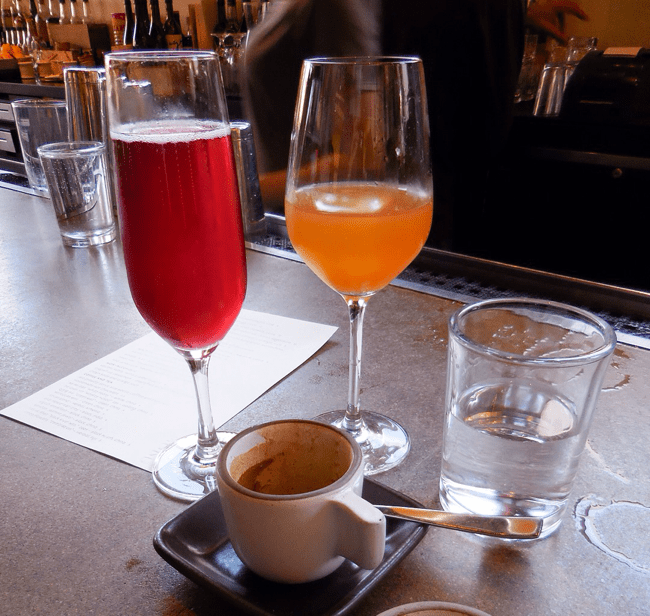
Putting beer aside for the moment though (it’s alright, you can pick it up again later) it’s also worth stopping into flavour-of-the-month eatery Nopa. In this ultra-popular spot, a late brunch can be accompanied by some pretty special cocktails.

My poison was a simple and refreshing Montenegro Lime (Amaro montenegro, lime). Franki sipped a Poinsettia (Cranberry juice, Gran Classico, Cava).

Make sure to reserve, or you might find yourself waiting an hour or more for food while sifting through what’s on offer at the bar. Which may not be a bad thing, of course.

Magnolia, on infamous Haight Street, is a pub-brewery-restaurant bearing architectural vestiges of its previous incarnation as a 1920s pharmacy. There are plenty of quality ales here should you need refreshment after wading through the thick cumulo-nimbus clouds of marijuana smoke suffusing original hippie hangout corner Haight-Ashbury. Try the Spud Boy IPA, brewed on site.

By far the highlight of San Francisco (booze-wise) was Monk’s Kettle, the daddy of San Francisco gastroboozers. We happened to visit this spot in the Mission district on the night that San Francisco’s baseball team, the Giants, won the World Series.

We walked straight from a raucous street party (imagine what it would be like if England won the World Cup) into this Mecca for beer-lovers. If such a notion isn’t inherently blasphemous.

The beer menu is so door-stoppingly large it could be serialised in a Sunday newspaper. Browse it here in all its glory.

The Levitation Ale is a smooth-drinking amber that slips down like ambrosia, the crisp Reissdorf Koelsch was a taste of the Rhine-Ruhr, while IPA-lovers should enjoy the Idiot, a well-rounded Double/Imperial offering draft that impresses without trying to do too much in any one aspect.

The knowledgeable waiting staff here are happy to help you choose and tables close to the bar have blackboards and chalk, for tipsy games of hangman. This is where beer lovers who have been extra good go when they die.

Highway 1

We drove from San Francisco back to LA, taking the scenic Highway 1 through beautiful Big Sur, staying in Monterrey, Morro Bay and Santa Barbara.

Special mention should go to The Libertine, a rough-and-ready tavern in the picturesque fishing village of Morro Bay with a wide and rotating selection of rare and local beers. ’48 rotating draft handles’, boasts the website.

But no trip down the Cali coast would be complete without visiting a winery along the way. Perhaps i came across a bit sniffy about Californian wine earlier in this post and that wasn’t fair. Inspired by a bottle of lush, apricotty Viognier from the Victor Hugo Winery (served at the excellent The Galley fish restaurant in Morro Bay), we stopped at the Roblar winery in the Santa Ynez Valley.

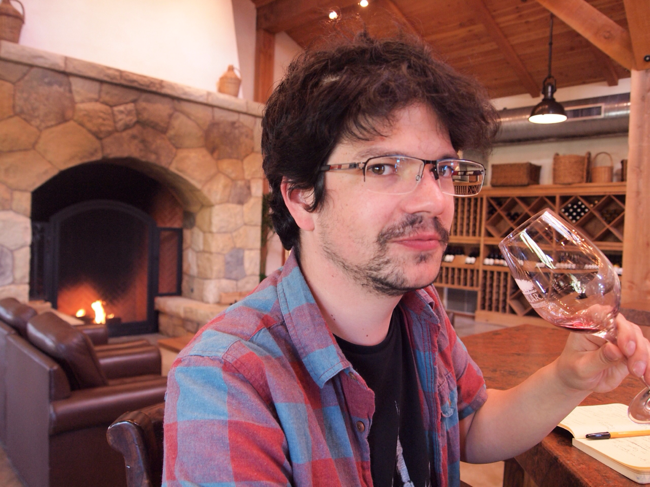
We enjoyed a tasting of five wines each, although sadly i was driving in the afternoon and had to donate part of my allocation with heavy heart to Franki. Here’s a picture of me with a heavy heart.

Highlights were a mouth-dominating cherry-noted 2011 Grenache and the 2012 Santa Rita Hills Chardonnay, which offered rich fruit flavours rather than the minerality i usually dislike about this grape. Both went very well with Roblar’s delicious flatbread pizzas. The winery itself is in a peaceful sunny estate that wouldn’t look out of place in the depths of rural Provence, despite being only a stone’s throw from the freeway.

The wining/dining area itself is rather less rustic but stylishly decorated in the manner of an old farmhouse renovated with modernist flair.

The verdict

In our limited experience, California is something of a tippler’s haven, with beer, wine and cocktails to write home about. It’s also hard to get about without driving though, so make sure you have a designated driver or enough greenbacks for a cab/Uber.

Top tipple: Work your way through those local Californian IPAs but i loved the Reissdorf Koelsch.

Gourmet’s choice: 2011 Grenache (14.9%, $32 a bottle), a blend from Roblar and the Camp 4 estate.

Bubbling under: Irish Coffee was supposedly popularised by the Buena Vista Cafe near Fisherman’s Wharf in San Francisco. It’s a creamy treat.

What to slur drunkenly: “Hey careful man, there’s a beverage here!” [The Dude, 1998]

Next stop on Booze of the World: Guatemala